11 January 2013

Heartwood Forest


Nel mezzo del cammin di nostra vita


mi ritrovai per una selva oscura,

ché la diritta via era smarrita.


In Charles Dickens's "Oliver Twist," not long after bludgeoning Nancy to death with his pistol and club in the depths of Spitalfields, Bill Sikes slipped out of his house and walked rapidly away, followed by his faithful dog, Bull's-eye.  He  went through Islington, up Highgate Hill, across Hampstead Heath and wandered, wandered, wandered until he ended up in Hatfield.  He stopped for refreshment in a pub, but a travelling salesman offered to clean the spot off his hat.  In horror, as the spot was Nancy's blood, Sikes fled the pub and eventually found shelter for the night in a shed on a heath.  The next day, having heard that the scouts were out to find him, he returned to London to meet his death at Jacob's Island.


It may be that his route took him from Hatfield through the Forest, but it is just as possible that he wandered west and slept that night on the hill above Sandridge, just outside St Albans, sheltered by woods that even then were ancient.


As I walk up the muddy track to Heartwood Forest, the trees spookily shrouded in mist, I remember Bill, and Nancy, and Dickens, their Victorian creator, who himself loved to walk distances through the night.  It is 'only' twenty-five miles from here to the centre of London, but where once the villages of Hampstead and Highgate were healthy rural retreats from the smoke and smells of the city, it is now almost continuously built up from the Thames to beyond the M25, and over two million people live within fifteen miles of Heartwood forest.  It is quite something to imagine the countryside stretching in towards the city, to think of walking from here in to the centre down muddy lanes and along leafy paths.


Sikes wouldn't have found much rest here now.  The tracks are churned to mud after the recent rains by innumerable dog walkers, runners, cyclists, horse-riders.  It is a much publicised and exciting project, with plans (which began to take shape in 2008) to plant 600,000 new trees on 858 acres of land before 2020.  It is England's largest new area of broad leaved woodland and is already drawing large numbers of visitors who appreciate the open air and like to develop their links with nature.  


For me the best parts are the relatively small parcels of ancient woodland, with names such as Wells and Pudler's Wood.  Here the trees have existed continuously for at least 400 years, self seeding and serving the human factor in a balanced way.  The ecological communities, dependent on the growth of new trees and the decay of old wood, aided by a lack of disturbance, are of great value and consititute natural heirlooms of wildlife for all to admire and enjoy.  


There are hornbeam which used to be coppiced, oak, beech, and other native broad-leaved species.  These woods, totalling some 45 acres, are home to a wide variety of natural species, from yellow archangels to barn owls, bluebells to long-tailed tits.  I am not sure what some of the creatures, previously used to relative peace, make of the gangs of children who build stick houses, or the dogs which charge around on the heels of their jogging masters or mistresses, but life seems to be going on, and my guess is that it will get better as the tiny saplings grow and the woods join up.


At present, there is a lot of open space; in the future there will be wild-flower meadows with corn-cockles and poppies where the soil is thin on the slopes of the chalk, but the hills are crowned with clay and flinty soil, and the trees will like it here.  It is still a developing site, and the stirring of the soil has given life to seeds that might have otherwise lain dormant.


For me it is at its best in the mists and drizzle as it has a muted beauty then, the air pungent with the scent of fungi and leaf mould, and there are less likely to be quite so many children playing, but there is room for all and on a bright day the birds, such as linnets and yellow hammers are easier to see.


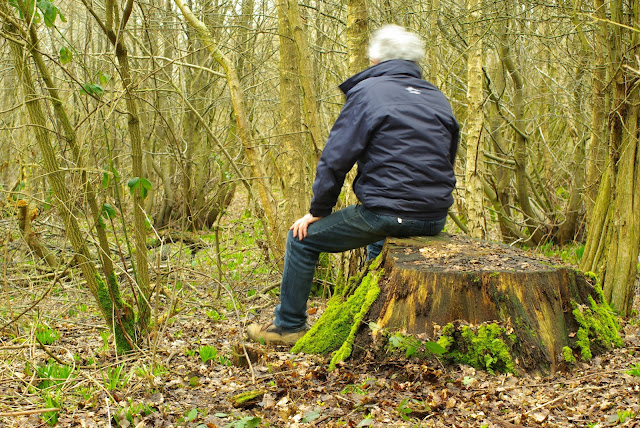
I count myself privileged, as it is only half an hour's walk from my home, and I can take quiet moments to sit on a tree stump and think, watched by the woven willow wildlife that don't seem to mind my presence.  I won't see the mature forest, but, like Bill Sikes, my spirit may wander here for some time to come. 


 "Here, Bull's-eye!
Do you hear me call?  Come here!"


http://www.woodlandtrust.org.uk/en/our-woods/pages/wood-details.aspx?wood=5622#.UPA0uSe6cTY

6 January 2013

Epiphany

La Befana


Domenico Ghirlandaio


This morning, when I woke, I found a sack of coal outside my door.  A bit much, I thought; have I really been that bad?

It is one of the oldest and most observed traditions of Italy that young children expect presents on the morning of January 6th, The Feast of the Epiphany, which celebrates the arrival of the Magi, representing the world of the Gentiles, to see the Christ Child and present their gifts. 

Sandro Botticelli

"And when they were come into the house, they saw the young child with Mary his mother, and fell down, and worshipped him: and when they had opened their treasures, they presented unto him gifts; gold, and frankincense, and myrrh."  (Matthew 2, verse 11). 

The Magi had journeyed for days and nights, following the star in the East, and on the twelfth night after the birth, they came to the house of a woman who had lost her child, and they asked her the way.  She was busy cleaning and declined to follow them.  Then a shepherd, following the wise men, also asked her to go with them.  Again she declined, but not long after she saw a great light in the sky and decided she would go after all and so gathered up all the toys and presents she had had for her own dead child and hurried after the men, carrying her broom.  Sadly she never caught up with them, and wandered unfulfilled, although some versions of the tale have her arriving at the stable to find the manger empty, where she delivers her gifts.


Ghirlandaio (detail)

There is a pre-Christian, Roman feast of Saturnalia in midwinter, associated with the gods Janus and Strenia, and this story may well have its origins within that world.  But then it has been transmuted further by turning the woman into a witch, riding her broomstick, called in Italy La Befana (clearly derived from Epiphany), who brings good children gifts on Twelfth Night, but delivers coal (or onions or garlic in some areas) to children who have been bad.....   

Many are the poems and songs which keep this tradition alive, from the Romanesque sonnets of Gioachino Belli in the mid 19th century, through the fourth movement of Feste Romane by Respighi, to a song popularised by Gianni Morandi in 1978  - 


"The Song of the Befana"

La Befana vien di notte

con le scarpe tutte rotte,

con la calza appesa al collo

col carbone, col ferro e l’ottone.

In modern times she is still very active, and Italian children expect their gifts on January 6th rather than Christmas Day, and lie awake on Twelfth Night fearful that they may hear the witch bumping her broomstick.  In Piazza Navona, in Rome, it is said she looks out of a window onto the busy Christmas market (which specialises in selling sugar sweets, especially those that appear to be lumps of coal) and the small town of Urbania, in Le Marche, holds one of the biggest celebrations of La Befana in a four day festival leading up to the Epiphany.  In Venice, on January 6th, they hold the Befane races, Regatta delle Befane, when gondoliers dressed as La Befana race on the Grand Canal.  In the Vatican City, following another tradition, a procession of hundreds of people in medieval costumes parade up the avenue leading to the Vatican, carrying symbolic gifts for the Pope who then says a morning mass in St Peter's to commemorate the visit of the Magi.

As an aside, in historical tradition the Magi were priests of the sacred fire. They were a privileged caste who, in Zoroastrian Persia,  symbolized the three worlds: earthy gold, celestial incense, and myrrh from beyond the grave.

In literature the use of the word "epiphany" (with a small "e") is used to denote a moment of revelation, or the sudden understanding or realisation of the nature or meaning of something.  This may occur following some experience which triggers a new way of seeing something.  James Joyce developed this idea in "Stephen Hero" and then "A Portrait of the Artist as a Young Man,"  when he sees a girl wading with her skirts hitched up, which reminds him of a bird, which reminds him of flight, and Icarus, and so reveals that his name (Daedalus) is associated with art and that that is where his life should lead......  But that is another story.

However, that may help explain why I found a bag of coal on my doorstep this morning.


Canzone della Befana - Gianni Morandi 1978 | Poesie della Befana http://www.poesie.reportonline.it/Poesie-della-Befana/canzone-della-befana.html#ixzz2HBghgHkk


31 December 2012

Merrie England - Part Two


WINTER

  
“The benches filled with famous men

Who fell to with relish; round upon round

Of mead was passed…..”


What could be more English?  Driving round the M25 in something like Brown Windsor soup at the tail end of December.  Spray and darkness combining to reduce visibility to the brake lights of the vehicle in front; the sky like a plaster ceiling about to collapse under the weight of an over-flowing bath above. 

And for what?  A holiday?  A trip to the seaside?  Surely this is as daft as it gets?  When the sapient majority is either on the beach at Sharm el Sheik or watching Match of the Day or The Great British Bake Off at home, why submit to the perils of aquaplaning into a traffic tsunami?

Well, for one, we are “British.”  And two, I have been reading Beowulf…… And, if I need a third, I am looking for “Merrie England” in the depth of winter - and not a Pickwickian snowscape neither, no twirling on pigs’ bones across the frozen Thames, nor too-hot-to-handle chestnuts to warm the cockles….

So whereto? 


First, into the past.  High above the swollen Deben estuary, across the water from the port of Woodbridge, in Suffolk.  It’s cold, and damp and deserted, but for some 1300 years here lay a remarkable man, buried with his ship and an unsurpassed collection of finery.  This is Sutton Hoo, and here we can taste the strands that formed the weft that became woven into England. 


The site would have been inhabited since the Stone Age, and was undoubtedly known to the Romans, whose roads passed nearby, but by the year 625AD the Romans had been gone for two hundred years, and a new power was developing, which would form the basis of the culture of this land, ready for the layering of invasion, religion and trade that added colour and texture over the centuries. 

The treasures that were buried here, with their historical and cultural values, were undiscovered until the owner of the land, Mrs E M Pretty, invited the archaeologist Basil Brown to open the mysterious mounds in 1938.  What he found, among other things, was the remains of a twenty-seven metre long ship, and when Charles Philips took over in 1939 silver and gold, enamels and jewels came to light, brilliant examples of Anglo-Saxon and Celtic art, as well as objects of everyday life, such as textiles, utensils and weapons.  An ornate helmet, seeming to frame a pair of raybans; a sword that was beaten from twisted threads of steel, manufactured with the greatest technological skill; a lyre which would have been plucked in accompaniment to songs of war and peace; a shield, embossed with golden animals whose eyes shine red with garnets, and a whetstone carved from one of the hardest stones known to man, topped with a stag finial, possibly used as a sceptre to denote the rank of a king.


After the Second World War the British Museum began a research programme and gradually the discoveries were analysed and understanding grew.  In 2002 the site was opened to the public, and, although the actual artefacts are in London, it is fascinating and atmospheric, even in the gloom of December.  There is a glory about this celebration of death, as it celebrates life, and through the patience of those involved the continuity of our past becomes more tangible, more relevant, and I suppose I can feel more purpose in a society which valued art, and which cared for the dead as if they live on.  We view a short film about the site and the world it explores, and while we are visiting a guide expounds on the traditions of feasting in those dark days.  It fits with Beowulf, as retold by Seamus Heaney:

“They sang then and played to please the hero,

Words and music for their warrior prince,

Harp tunes and tales of adventure:

There were high times on the hall benches…..”

There is the Janus effect.  We look backwards and we look forwards.  At this pivotal point of the year, with the darkest days behind, our hopes rekindle, but they are hopes built on experience.  So the marvels buried at Sutton Hoo inform our future: if this is how it was, then why should it not be better?


We return to the present, and move on to our accommodation, at the quaintly (and inexplicably, though it may derive from a local type of eel trap) named Eel’s Foot Inn at Eastbridge.  From here it is a pleasant, if waterlogged, walk to the RSPB Reserve at Minsmere, and the coast from Dunwich to Sizewell. 
Here, between coastguard cottages and the mosque-like white dome of Sizewell B, birds and animals are protected, at least from man (for the moment, though we do not yet know about Sizewell C!) in reed beds and woods.   
This is one of the RSPB’s flagship reserves, with excellent facilities and a number of hides and walks.  The variety of birds is dazzling and serious birdwatchers will return in all seasons, and there are also Konik ponies and deer to see. 
We are fairly lightweight when it comes to identifying distant shapes, but are spellbound by the views from the Island Mere and Bittern Hides.  I just miss seeing an otter (but am shown a picture of it, strangely taken on exactly the same camera and with exactly the same lens as I have) but succeed in counting nine Marsh Harriers circling and settling in the dusk.

After a grey and washed out day the sun slips below the cloud cover and suddenly illuminates the scene, side-lighting the reeds and silhouetting the bare trees in the distance. 
Flights of birds sweep in, dark shapes against the sky. 
It is glorious, and I suddenly think of the warrior in his boat tomb, the years in between dissolved as time sheers away to nightfall.

We walk back to the pub.  The road and flooded fields gleaming in the last of the light.  A wood-burner glows warm in the inglenook, and we restore ourselves with homely food and ancient ale.  A gathering of musicians materialises round the fire, and instruments are tuned to the background of harmonious chatter.  Songs begin to flutter in the hall, and I imagine horns of mead passing from friend to friend.


The musicians take their turns, and their airs illustrate the intermingling of folk, from a tune by O’Carolan, the eighteenth century Irish harpist and composer, to shanties from the seafaring past; from an a capella rendering of Bob Dylan’s “Boots of Spanish Leather,” which exposes its Celtic origins, to a deftly performed cover of Phil Ochs’s “There But For Fortune,” which was a commercial success for Joan Baez in 1964.  The array of instruments, from bones to accordions, is impressive, as are the individual and combined talents on display.  Ron sings a rousing song about the economic crisis and draws everyone into the chorus:

“Bugger the bankers and politicians

Bugger the bureaucrats too

Bugger the buggers that make up the rules

And if you’re one of them

Then bugger you….”

And we all feel much better for that!  The Geats are in their element!  Grendel is buggered!


This kind of evening may not be to everyone’s taste, but it is exactly what I was looking for on this occasion.  Singing by a fireside, lubricated by quaffs of local ale, the oral traditions of folk song and the rhythms of dance erasing the memories of cold and wet – Merrie England thrives!  At least for the moment…..


“The poem was over,

The poet had performed, a pleasant murmur

Started on the benches, stewards did the rounds

With wine in splendid jugs……”

In the morning we stop at Leiston Abbey, wet feet, splashed with raindrops, umbrella-ing our visit with no one in sight.  But then, touching the brick and pebble walls, passing through loops and breaks in the walls, we feel the weight of years, the strange dislocation of the abbey from below, towards the coast, in the 14th century and then the brutal destruction by the henchmen of Henry VIII, but now we hear the tuning of instruments, the accordance of an ensemble, coming from on high within the reconstruction of the monastic buildings…..  A music school, Pro Corda, now occupies the site of the Premonstratensian Abbey, and, in a wonderful way on this grey wintry day, the sound of instrumental music issuing from a high window in a ruined abbey ties these chords together, as we link up the burial at Sutton Hoo, with the music at the Eel’s Foot Inn, with the idea of Merrie England. 

As we leave we look back, then turn once again to the future. The year ends and another begins.  Fortune, good night.  Smile once more.  Turn thy wheel.”


With thanks to Seamus Heaney for the quotations from "Beowulf"

http://www.rspb.org.uk/reserves/guide/m/minsmere/

http://www.procorda.com/index.php?pid=44&p=About_Us

23 December 2012

Winterreise


A cold coming we had of it......


"Ich kann zu meiner Reisen
Nicht wählen mit der Zeit,
Muß selbst den Weg mir weisen
In dieser Dunkelheit...."

"For my journey I cannot
choose my time;
I must find my own way
In this darkness...."
 

Franz Schubert’s 1827 Song Cycle “Winterreise” sets twenty-four poems, written in 1821 and 1822 by Wilhelm Müller, to music for piano and voice. 


Winterreise” is essentially about feelings and atmosphere, but it tells the story of a young man who has come to live in a village with a family of mother, father and daughter.  Inevitably, perhaps. He falls in love with the daughter and he believes his love is returned. However the daughter decides to marry a wealthy suitor more approved of by her parents. And so, on a winter’s night he steals away, writing a farewell message to his beloved.  He notes the changeable weather-vane (and regrets not thinking of what it signifies before), is mocked by crows, tormented by memories of love, and his journey is cold and painful.  He is turned away from an inn, sees three suns in the cold bright sky, and in the final song he attaches himself to Der Leiermann (an organ-grinder or hurdy-gurdy man) who is being snarled at and chased by dogs.


The cycle is romanticism at its peak.  Schubert, who was 31 when he died, wrote over a thousand pieces of music, six hundred of which were songs.  Winterreise,” completed only a year before he died, is compelling, mysterious and beautiful.  The image of a young man stumbling into a winter’s night carries a symbolic weight which is difficult to shake off.  It is self-indulgent, immature, perhaps, and more Shelley than Byron, less admirable than pitiable, but it is imbued with emotions few can deny, and is tinged with religious overtones that strike deep within our cultural core.


It is probable that Schubert died of syphilis, or from the mercury used to treat it, and his suffering would have been cruel.  It is possible, therefore, that he felt bitterness for having contracted such a disease without the comfort of love, or the companionship of one he may have thought he loved.  But he was an artist, a performer, a visionary, and he transformed his personal anguish into irony, into something universal.  We do not have to share the detail to understand the feeling, the loneliness.  The fugitive struggles with existence on the face of a hostile world, knowingly destroying himself in emotional turmoil.


Winterreise” is immortal.  It has been performed by the great Lieder singers, both tenor and baritone.  In 1995 a youthful Ian Bostridge and Julius Drake performed it and in 2000 this interpretation became a striking film directed by David Alden which emphasises the fragility of the anti-hero.  Bass-baritone Thomas Quasthoff accompanied by Daniel Barenboim give a very different rendition which can be seen on YouTube.  A 1963 recording by Peter Pears and Benjamin Britten is still available, and there are at least 107 recordings in the catalogue, including some by sopranos, but the work is indelibly connected with the memory of baritone Dietrich Fischer-Dieskau, who officially recorded it eight times before his death at the age of 86 in May 2012, with various pianists, including Alfred Brendel, Daniel Barenboim, Murray Perahia, and four times with Gerald Moore.


Although the words, achingly full of dread as Schubert himself described them, and the expression of the singer, are key to any interpretation of the isolation of this wanderer, the piano is more than just accompaniment; the relationship between pianist and singer is at times like that between rider and horse, with the one tugging at the other, the one holding the reins the other providing the power.


The journey, and the image of the rider, connects with another winterreise, that of the Magi.  T S Eliot published “The Journey of the Magi” in his Ariel poems in 1930 as a kind of Christmas card.  His narrator questions his journey, and its difficulty, highlighting the alienation of dislocation, much as the young couple had had to travel in pregnancy to Bethlehem.  Eliot drew inspiration from a sermon on the Nativity written by Lancelot Andrewes in 1622:  A cold coming they had of it at this time of the year, just the worst time of the year to take a journey, and specially a long journey in. The ways deep, the weather sharp, the days short, the sun farthest off, in solstitio brumali, ‘the very dead of winter.’


All this was a long time ago, I remember,
And I would do it again, but set down
This set down
This: were we led all that way for
Birth or Death? There was a Birth, certainly
We had evidence and no doubt. I had seen birth and death,
But had thought they were different…..


In Rome, at midnight on Christmas Eve, in the Basilica di Santa Maria in Ara coeli al Campidoglio, a wooden baby is brought into the light.  The birth of Jesus is renacted on the altar of heaven, high above the Roman Forum, year after year, and every year the pressing crowd suddenly draw breath, literally in-spire, as the Bambino Gesu is exposed.  Candles gutter, curtains flutter and window glass even seems to flex as the people breathe in, gasping at the miracle before them.  It is a mass inspiration that gives hope for the year to come, even though it is still a winter’s journey.....


    "Nun ist die Welt so trübe,
     Der Weg gehüllt in Schnee." 

    "Now the world is so gloomy,
        the path is shrouded in snow."
 
So Wilhelm Müller set out on his journey, with the thrumming piano of Franz Schubert, both of them barely twelve months from their pre-mature deaths. 
 
The cold is heavy. I feel the closing night around my shoulders like a cloak. I fold into a drift, foetus position in freezing sleep.


I am moving forward, my back braced against the harness, the harness taut against a rope. I am dragging a sled upon which Franz Schubert, his hands held together by woollen finger mittens, his curled hair and spectacles rimed with frost, plays my accompaniment on an upright piano, the notes tinkling down in frozen splinters like icicles, musical shards scattering on the snow.


In the distance I catch sight of a caravan of camels. They are heavily laden, signifying wealth. The front three riders communicate through speech bubbles rising above their turbaned heads. The words of the first are strange and the script is beyond me. The tone of the second seems to be of reproach and somehow the rhythm of the punctuation smacks of tetchiness with his interlocutor. The third uses latin, perhaps to annoy, and I can see the word stella – but he complains it is the wrong star. The second man now gestures to the heavens in impatience, shaking a finger in anger at the shining objects that confuse within the obsidian night. 


My concentration has lapsed. I heave forward to keep the sled in motion. Then, without warning, I feel hot breath across my face, a breath of honey and blood. My cheek and eye are slashed by a wet tongue, rough and warm. I start back, but a huge ragged lion places a heavy paw on my shoulder, its glazed eyes sparkling in the chill. "Pass friend," he seems to say, in a voice that resonates in the wilderness like a sawn-off bassoon. "Your journey is long, and it's not dark yet...."


http://www.youtube.com/watch?v=BCVnuEWXQcg