13 November 2022

Says Who?

Now Cezanne takes your hand

(And leads you to the riviera....)


I know you won't care but my paternal grandfather would have been 137 on the day I snapped this picture with my iPhone out of a train window on my way from Nice to Marseilles.  What's more (I won't be long), my paternal grandfather would have been 21 when Paul Cezanne died (and 49 when Leonard Cohen was born).....

And what's that got to do with the price of fish? I suspect you demand....

Well, exactly a month to the day after my grandad's birthday I visited Cezanne at the Tate Modern and was struck by how close I had been to his preferred hideaways on the Med.  This is  one of his views of the bay of l'Estaque - ok it's a bit beyond Marseilles from where I was, but it's close enough.....


And this is another:


And, despite my wonderings (in an earlier piece), about the value of art, I feel uplifted.  My photograph is a mere zilch compared with the way these two pictures have been composed and worked on.  I still have my reservations, but there is something about this man's lifelong pursuit of vision.

Cezanne visited this coastal place many times over fifteen years from 1870, and painted more than 40 pictures of the village and its surroundings.  In a letter to Pissarro he described the views as being like a playing card.  Red roofs against the blue sea.

As Meyer Schapiro commented on the first of the views above:  Without paths or human figures, the world is spread out before his eyes, a theme for pure looking; it invites no action, only discernment..... A marvellous peace and strength emanate from this work - the true feeling of the Mediterranean, the joy of an ancient nature which man has known how to sustain through the simplicity of his own construction.

I'll second that.  I found the pictures brought me a sense of peace.  There is something focused and intense in Cezanne's investigations and experiments. He worked on countless variations of the genre of still life painting, sometimes using the same objects again and again.


These objects are posed against a background of folded fabric - produced in Provence near where he lived - which connects the fruit with the table and the jug and bowl.  These are not naturalistic arrangements - Cezanne has carefully composed a balanced variation of a common unbalance (Meyer Schapiro).  We are invited to stop and study his work, from various angles....


And then we move on, to gaze at a different take on similar objects.  Cezanne is a poet with a brush, constructing images which charm us with their individual accounts of aspects of our lives.....


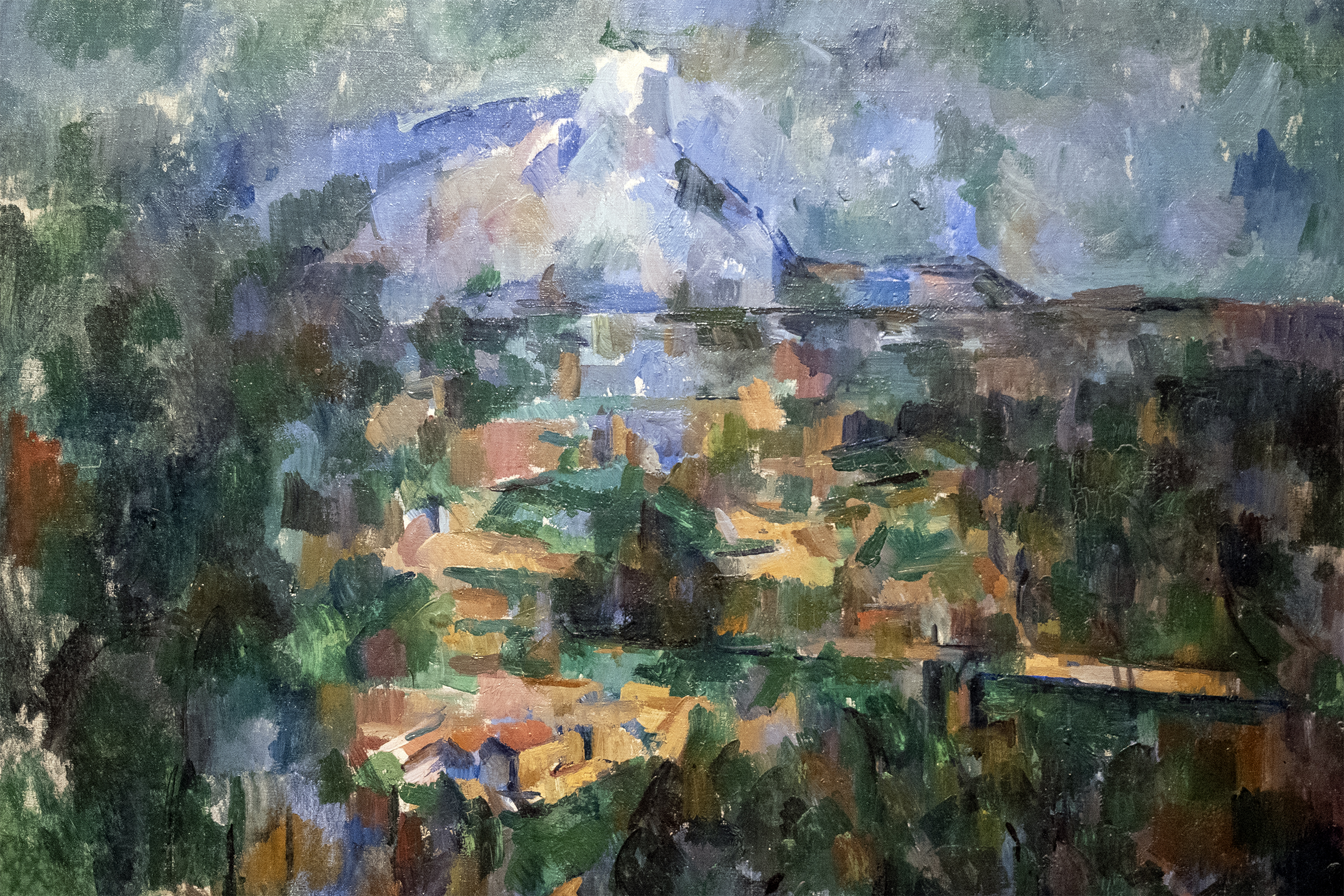
Cezanne inherited his father's estate, Jas de Bouffan, in Aix-en-Provence in 1886, and from the grounds he could paint Mont Sainte-Victoire, which he did repeatedly from this and other nearby viewpoints - it figures in more than 80 of his later paintings and watercolours.  The notes accompanying this exhibition tell that Cezanne learnt about the geography and geology of the mountain ridge from his childhood friend, naturalist Antoine-Fortuné Marion, and that with this knowledge, combined with methodical observation, Cezanne was able to create a new sort of landscape that deeply engaged with the terrain of his homeland.


And, as he progressed, his views became freer.  As Meyer Schapiro observes, he creates a stormy rhapsody in which earth, mountain, and sky are united in a common paean, an upsurge of colour, of rich tones on a vast scale.... 
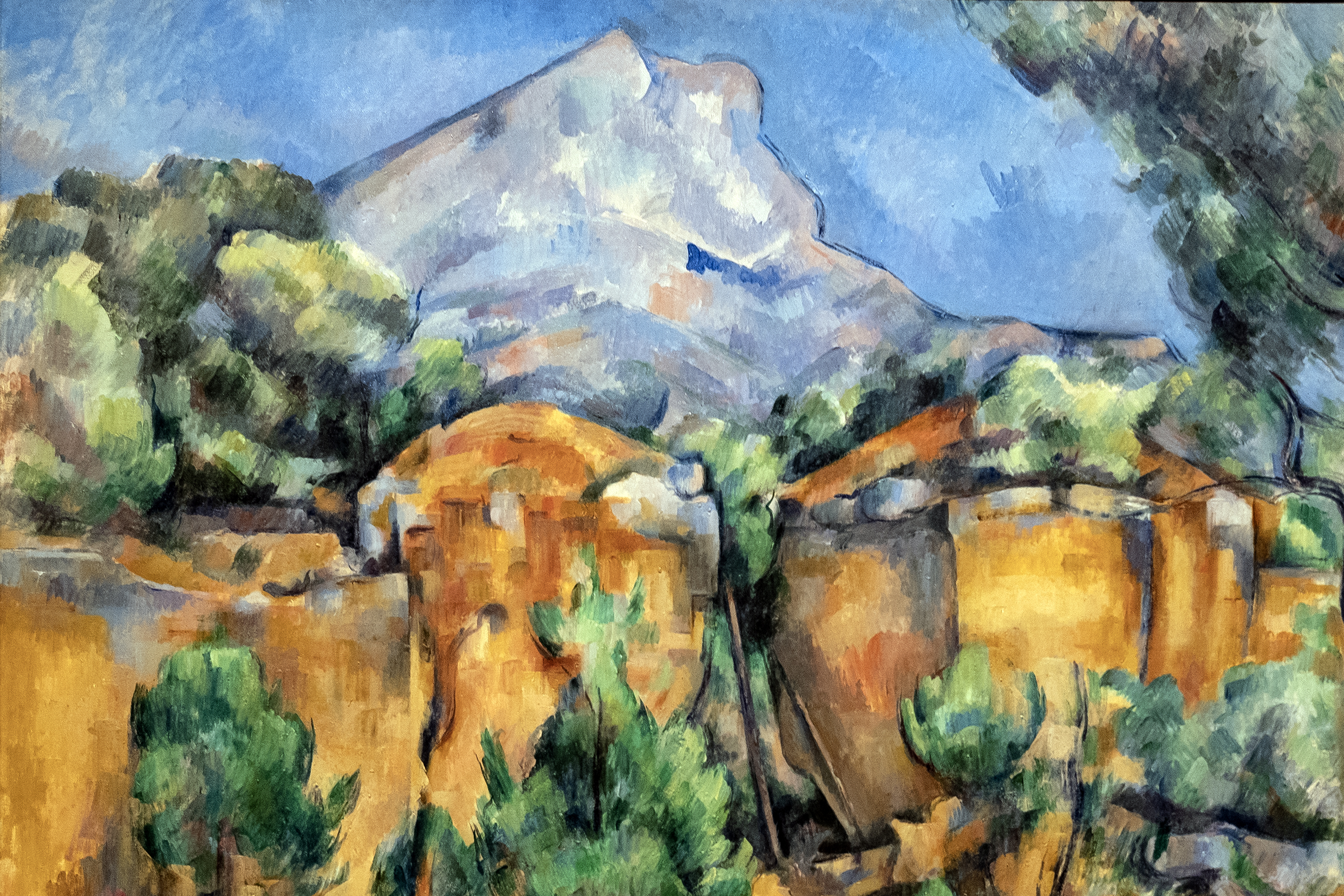


The mountain rises passionately to the sky and also glides on the earth.....


And then, towards the end of his life he washed away some of the complexities.  He suffered from diabetes and became frail.  He worked in his custom-built studio at Les Lauves, and produced some pared back images of Mont Sainte-Victoire.


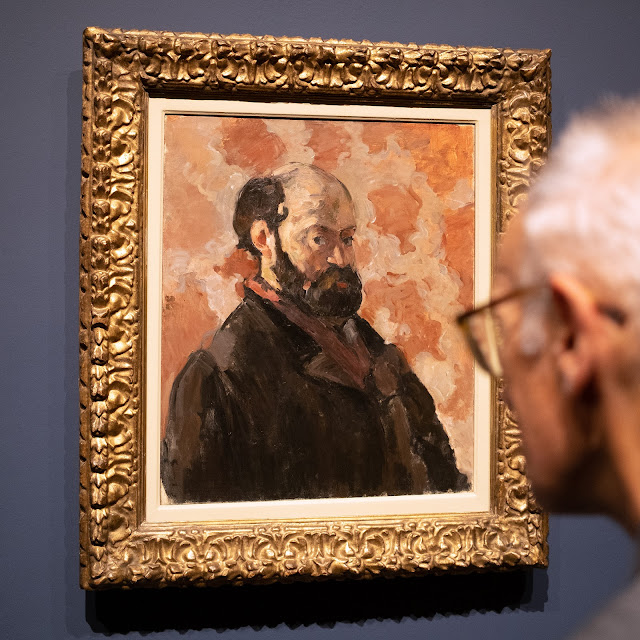
I find that I love Cezanne.  Knowing precious little about him before this exhibition, I came away with a feeling of illumination.  I generally find art galleries exhausting - there is too much to take in, too many people, too many ideas:


And then I came out into the Turbine Hall and was confronted by someone else's installation:
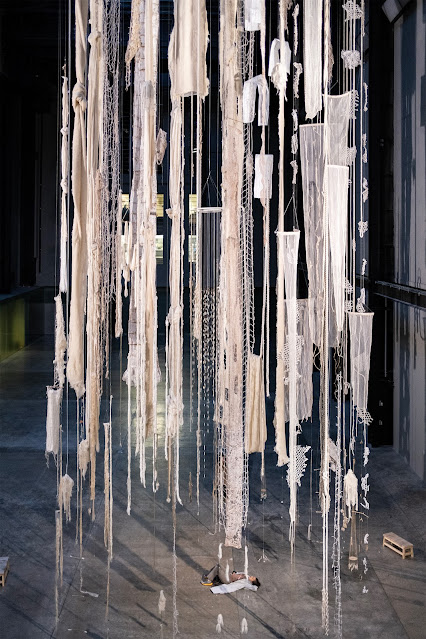


And I thought to myself, No, not today.  I am full of Cezanne,

And I want to travel with him
And I want to travel blind
And I think maybe I'll trust him......


 Paul Cezanne.  Leonard Cohen.  My grandad.  All very different people, but I want to thank them.  They have made my paltry life a little richer.....


8 November 2022

Treasure Trove

 The Snettisham Hoard.....


The Great Torc


Imagine this.  A state of uncertainty, even crisis.  You don't trust the bankers (despite recent hikes the interest rate is still negligible for deposits).  You actually don't trust anyone, as a succession of leaders have proved themselves to be self-serving charlatans without clear ideas....  You have in your possession a certain amount of hard won valuables.  A handful of money and some expensive, if impractical jewellery.  There is a war in Europe and there is talk of an invasion.  You don't want to lose everything. You want to preserve something for your children.  What you gonna do? 

Of course, you dig a hole.  Quite a deep one, and you place your best pieces in a container deep in the hole.  You then infill some of the cavity.  Then you place some of your lesser treasures in another container, place that in the hole and cover everything with soil.  Job done.


Well, near where I now live, there was some unusual activity a few years before Julius Caesar dreamed of extending the Roman Empire beyond the shores of the EU.  Someone (or some persons) decided to bury several crates or containers of treasure (jewellery, ornaments and other various pieces of gold and valuable metal alloys).  And, perhaps in order to confuse potential robbers, the best items were buried well beneath some of the lesser pieces.


It is not known who was responsible for this primitive exercise in safe depositing, nor why such an amount was interred, but when it was unearthed it constituted the single greatest Iron Age treasure trove (I love that otherwise obsolete use of Latin, now still the root of trovare - to find - in Italian) discovered in this part of the world.  One theory is that the rulers of the Iceni Tribe felt the need to conceal much of their important ritual precious metal pieces beneath their treasury.


Fast forward to 1948.  By now, not surprisingly, those who buried the above treasures, or who might have heard rumours of the same, are well dead. But post-war agricultural developments meant that a certain field was no longer planted with lavender and a tractor was employed to drag a modern deep plough across the plot.  The driver (Mr R L Williams) found his plough had snagged some metallic objects, which, on inspection were deemed to be part of an old brass bedstead, and so they were piled at the edge of the field.


The roadside today (no treasure visible from the bus)


A passing expert (who just happened by) thought further excavation was merited, and a number of gold and silver artefacts, including bracelets, torcs - or torques - (a kind of open necklace) and some coins came to light.


Picture courtesy of the British Museum


In 1950, the tractor driver (on this occasion Mr Tom Rout) hit the jackpot and turned up further articles of value, including the finest torc of all.


Tom F Rout


With the help of box scrapers and metal detectors, further work was carried out in 1964, 1968, 1973 and 1989.   The combined finds from this field constituted the first large group of Iron Age metal work to be found in England and Wales which included coinage, and this enabled the finds to be dated between 100 BCE and 25 BCE, with the probable time of concealment being between 25 BCE and 10 CE.  


To quote the magazine Current Archaeology, from May 2007, The best evidence for the dating of the hoards comes from the coins, of which there were some 234 in all: indeed five of the hoards contained coins. They are all Celtic coins, of the early, uninscribed variety, the majority being Gallo-Belgic imports, as well as some early British types. These early Gallo-Belgic are dated to around 70 BC.....

Why is this of interest or importance?  Well one simple reason is related to an examination currently set for those aspiring to British Citizenship. The other day the Times newspaper published ten questions extracted from this test:  look closely at question 3.....


and then look at the answer printed below.  Then compare with the evidence from the Snettisham Hoard (among other Iron Age finds.....)  I am so very glad I am not interested in becoming a British Citizen!

Anyway..... The Snettisham Treasure is a wonder in itself.  Who buried it and why, and how it remained undiscovered for so long remain mysteries.  But the fact that metal workers some two thousand years ago or more were so skilled is to be marvelled at, if only because in this so much more civilised age  some people still understand so little of what it means to be civilised....  And it wasn't just one person.  The Great Torc, for example, is made of strands of twisted alloy that would have taken three to twine.

At the present time, the Snettisham Hoard is divided between Norwich Castle Museum and The British Museum, where it lies alongside other indigenous treasures as the Mildenhall Great Dish and the Sutton Hoo Helmet, not to mention a few bits and pieces looted from the rest of the world....


There were, it should be mentioned, other finds in this area, such as the Snettisham Jeweller's Hoard, buried around 155 CE and discovered in 1985.

And then there are the hordes (Tangles) of Knot that flock across the Wash at exceptional high tides.  (Excuse the pun....)


For most people, however, it is the Iron Age Treasure that is the Torc of the town, and justifiably so..... 


Though, for me, there is only one treasure, and that is personal.....


Lay not up for yourselves treasures upon earth, where moth and rust doth corrupt, and where thieves break through and steal:
But lay up for yourselves treasures in heaven, where neither moth nor rust doth corrupt, and where thieves do not break through nor steal:
For where your treasure is, there will your heart be also.

St Matthew, Chapter 6, verses 19 - 21


Imagine this. A state of financial crisis. You don't trust the bankers. You actually don't trust anyone, as a succession of politicians have proved themselves to be self-serving and corrupt with scrambled fantasies.... You have earned a few savings and are paying off a mortgage loan. There is a war in Europe and there is talk of an invasion. There is also talk of austerity, of tax hikes and service cuts.  And there is  rampant inflation. You don't want to lose everything. You want to preserve something for your children. 

What are you going to do?


20 October 2022

Autumn Leaves

Les feuilles mortes 


It is, suddenly, autumn. I have been away. Then I was floored by a measly virus. I woke, and it was Autumn. The summer had gone, and winter was nigh.


And what, who is left?  It is autumn.  The leaves are falling.  First Her Madge.  Now MissTrusst.   Khasi Kwarteng. The pound.  Braverbitch.  The conversative prattle. All trussed up and nowhere to go.....


Jacques Prévert had this to say, around 1945 perhaps:

Les feuilles mortes se ramassent à la pelle
Tu vois, je n’ai pas oublié
Les feuilles mortes se ramassent à la pelle
Les souvenirs et les regrets aussi

Some time later, thanks to Johnny Mercer, perhaps, Nat "King" Cole, Frank Sinatra et al, the poem became famous as Autumn Leaves, and, should you wish to hear an angel sing, please try this:


[And, should this link not work, look for Eva Cassidy, Autumn Leaves on Youtube.]  

Eva died in 1996, just 33 years old, but so beautiful.....

So little time.  So much love.


I took a walk the other day.  I wanted to reflect on the season, on the good things. I met a robin. The bird sang to me, looking this way and that, and I wanted it to last for ever....


I find the autumn rich in many ways. Rough pigs snuffle up the prodigious harvest of sweet chestnuts, careless of my approach:


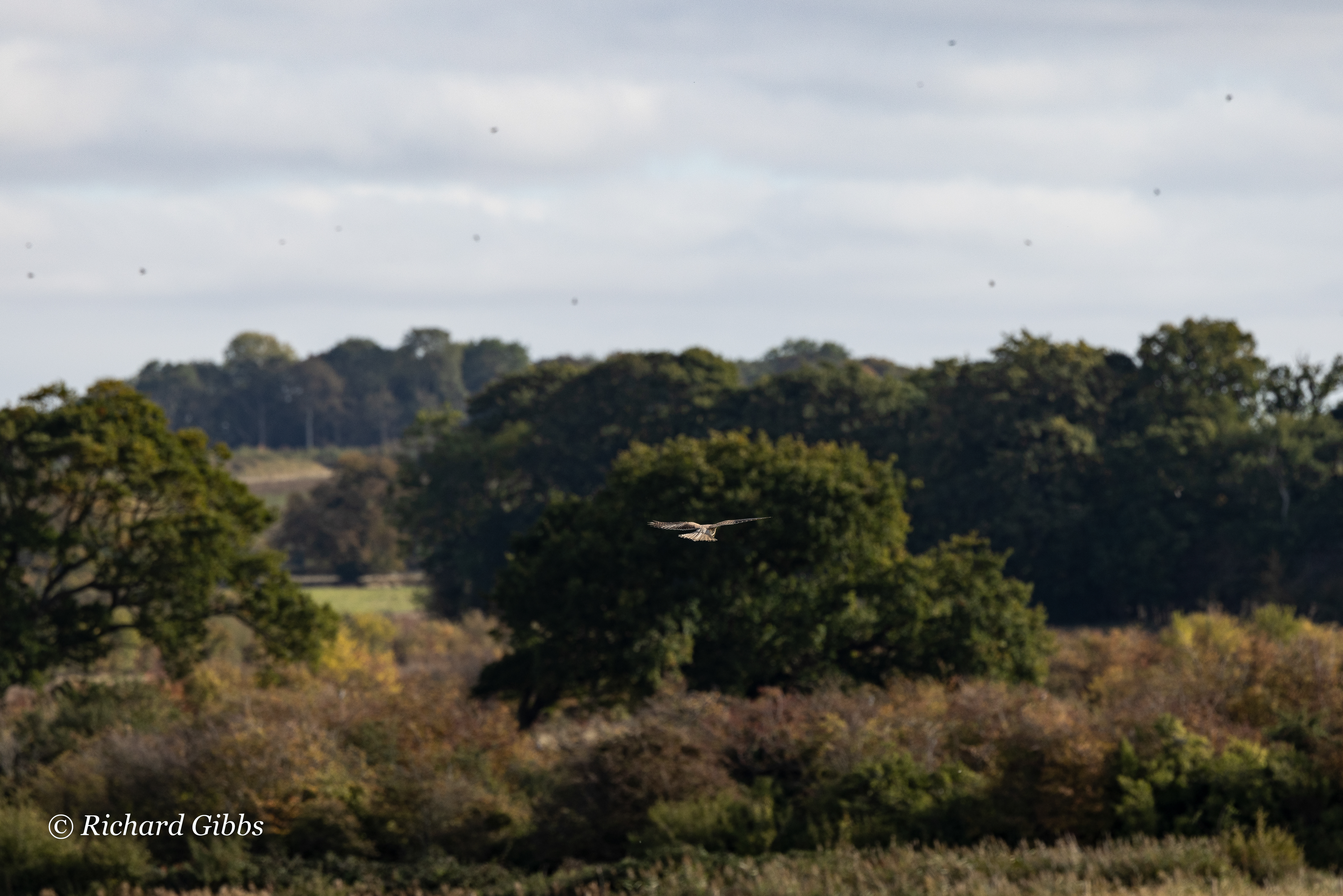
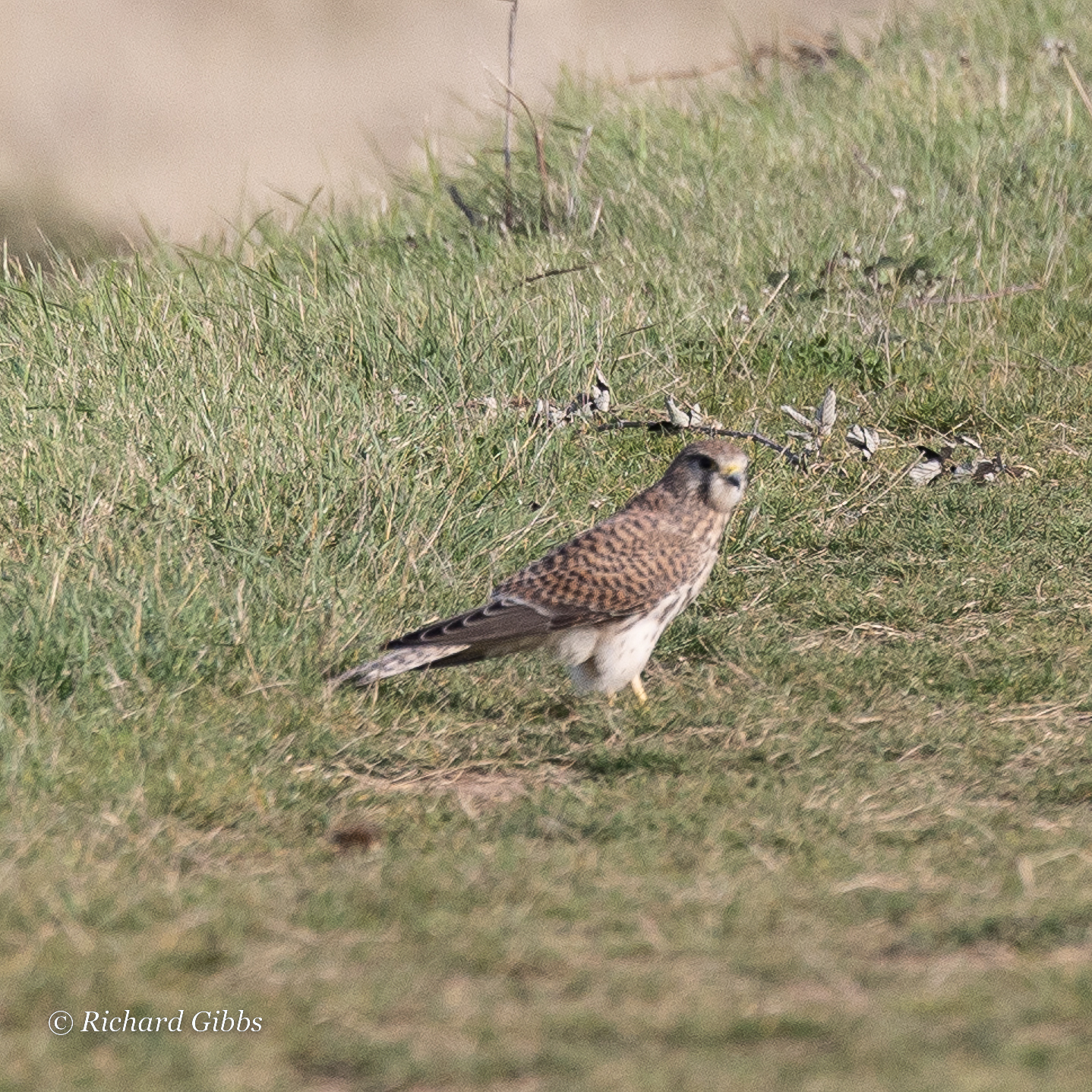
A kestrel windhovers, with respect to Gerard Manley Hopkins, following the infrared trails of shrews in the grass while scores of Redwing flit by as specks in the sky, shy to man, but intent on harvesting the hedgerows to flesh up for a hard winter.....


Then he falls to rest, tired of the game, maybe wondering why the marsh is so dry, why there is still that taste of summer's burning, why there are so few shrews just now....


While just one of the so many migrant redwings fails for a nanosecond to escape my lens (except, he wins - I am too slow).....


The falling leaves drift by my window
The falling leaves of red and gold


It is so beautiful today.  Time stands shakily still. I think of leavers, fallers. Yes the arrogant, ambitious, careless politicians, who have brought us to the brink, but, much more importantly, those friends who have lived their lives honestly and given at least as much as they took.  I have been to two funerals this week, celebrations of lives well spent.  And at this moment Amanda, my dear partner of some forty years lies in hospital puzzled by the comings and goings of strangers, having spent hours and hours in an ambulance at the doors of A & E....  

I see your lips the summer kisses
The sunburned hands I used to hold
Since you went away the days grow long
And soon I'll hear old winter's song


Eva Cassidy's life was so short, but her recordings are so uplifting.  How is it that the good die so young, while we are left with the shameful dross?  

I walk home from Amanda's Care Home.  I find a horse with tears in her eyes.  What does she know?


A Pied Wagtail poses for me, brave against the future, risking its all against my heavy lens.  If only such pertness was coupled with human sensitivity, maybe people might love each other more.  A smart little bird, living for the moment.  No ambition (?) and no intention to profit from others.


So we beat on, boats against the current, borne back ceaselessly into the past....


But I miss you most of all my darling
When autumn leaves start to fall


I miss you most of all my darling

When autumn leaves start to fall


7 October 2022

An Album for Amanda


 People, smiling


At the Doctor's in Snettisham, October 7th 2022


I had not seen Amanda for over a month - partly by design (my respite trip) and partly by bad luck (I caught COVID). Today we met.  Did she know who I am? Maybe there was some familiarity, but who was I?  Even I can't answer that.....


Anyway, I brought her a little album of snapshots from my holiday - pictures of people and places we shared together, in some cases for forty years or so.


You are who you meet; could that be sense?  It is hard to be someone without connections, just as it is hard to be you without your history.


This trip I have just made, has been a kind of piecing together of places Amanda and I frequented and revisiting of old friends of ours.


Amanda cannot talk about our past now, her ability to converse erased by dementia, but I want to believe that she might recognise some pictures, that faces and places might light some little candles in the empty space inside her head.


I won't put names to the faces - perhaps our friends would rather not be immortalised in this way - but I want to thank them for their friendship and support, and for their love of Amanda.


Rome is where we met.  And we shared so many times there, lounging in the infinity of experience, not thinking about the future, not caring about the past.....


My part of Rome was Trastevere - by the church of Santa Maria.  SPQR and fountains.  unchanged, unlike the people around.  Gone are all the traces of even the recent past - Gore Vidal, Anna Magnani, John Francis Lane..... Trilussa.  Watch Fellini's Roma to see this piazza exactly as it is now.


This was my front door.  Less daubed now than last time I passed by, but still firmly closed.  Seven years I lived behind those wooden panels.  Seven years of love and life.....


And this was the Rome I loved - the Tiber swirling past.  Leptospirosis and history.  A murky flow.


Then there was Lake Bracciano - the cool clear waters of an ancient caldera, still fuming gently, while we grew together.  Trevignano Romano, a kindly village, where we grew together, and grew our children.


Then there was Monte Amiata, a smouldering Tuscan giant


Where time stood still in an old farmhouse, so quiet my ticking watch would sound like a grandfather.


Held together in history for us by Corrado, always old, now very old.....


And it is people that really hold these pictures, these places, together.  I show them to Amanda.  She laughs in gentle pleasure.  But does she remember?  The faces have aged, the cells are new, but we were friends, and friendship holds us/held us together.  

Here is an album - no names - just a few  smiling people who gave us so much over the Italian years and who still care. It's not a complete gallery - just some happy snaps from September this year. A September without Amanda....


Thank you, friends....


*   *   *   *   *


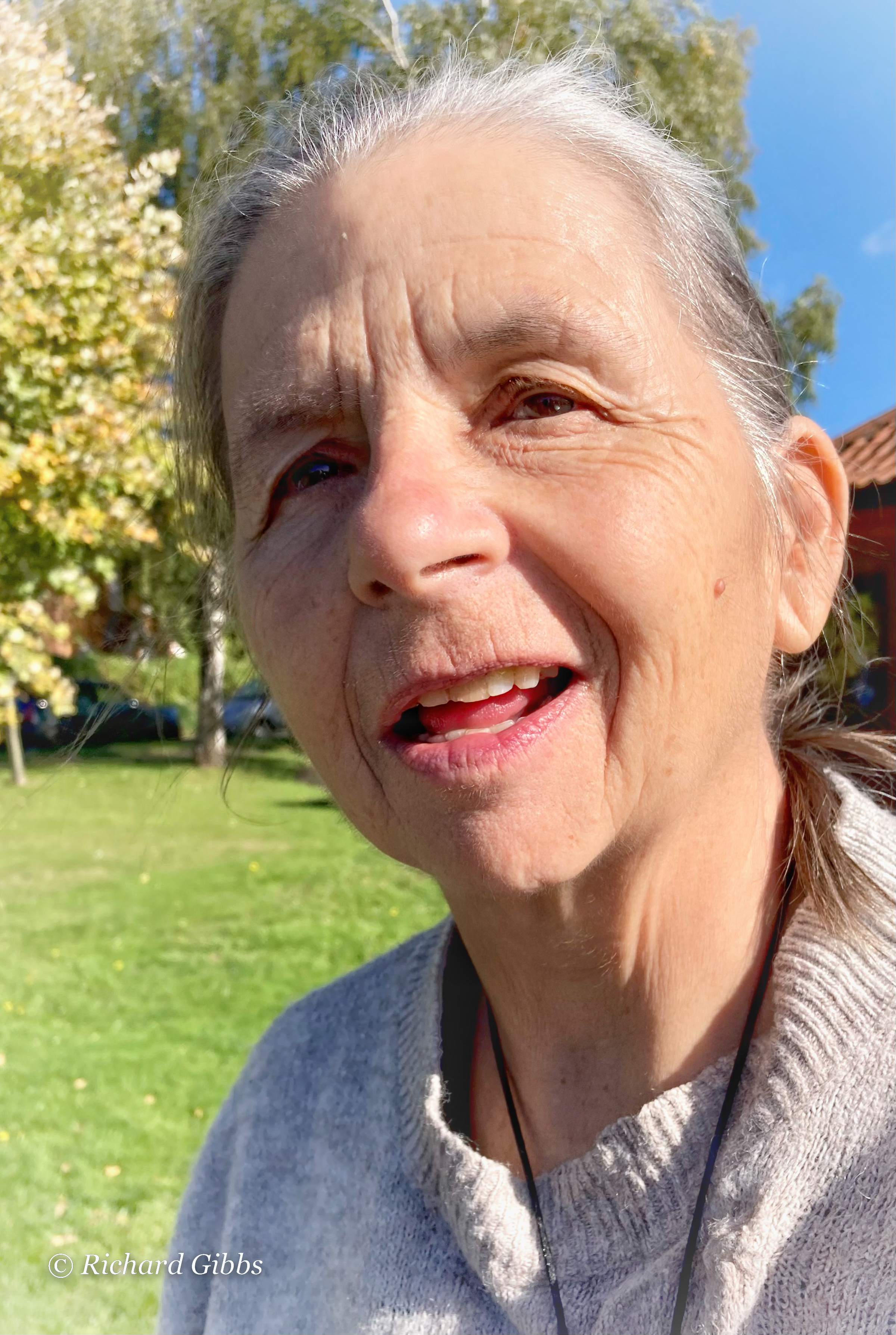
And here is Amanda today:


October 7th 2022, Snettisham


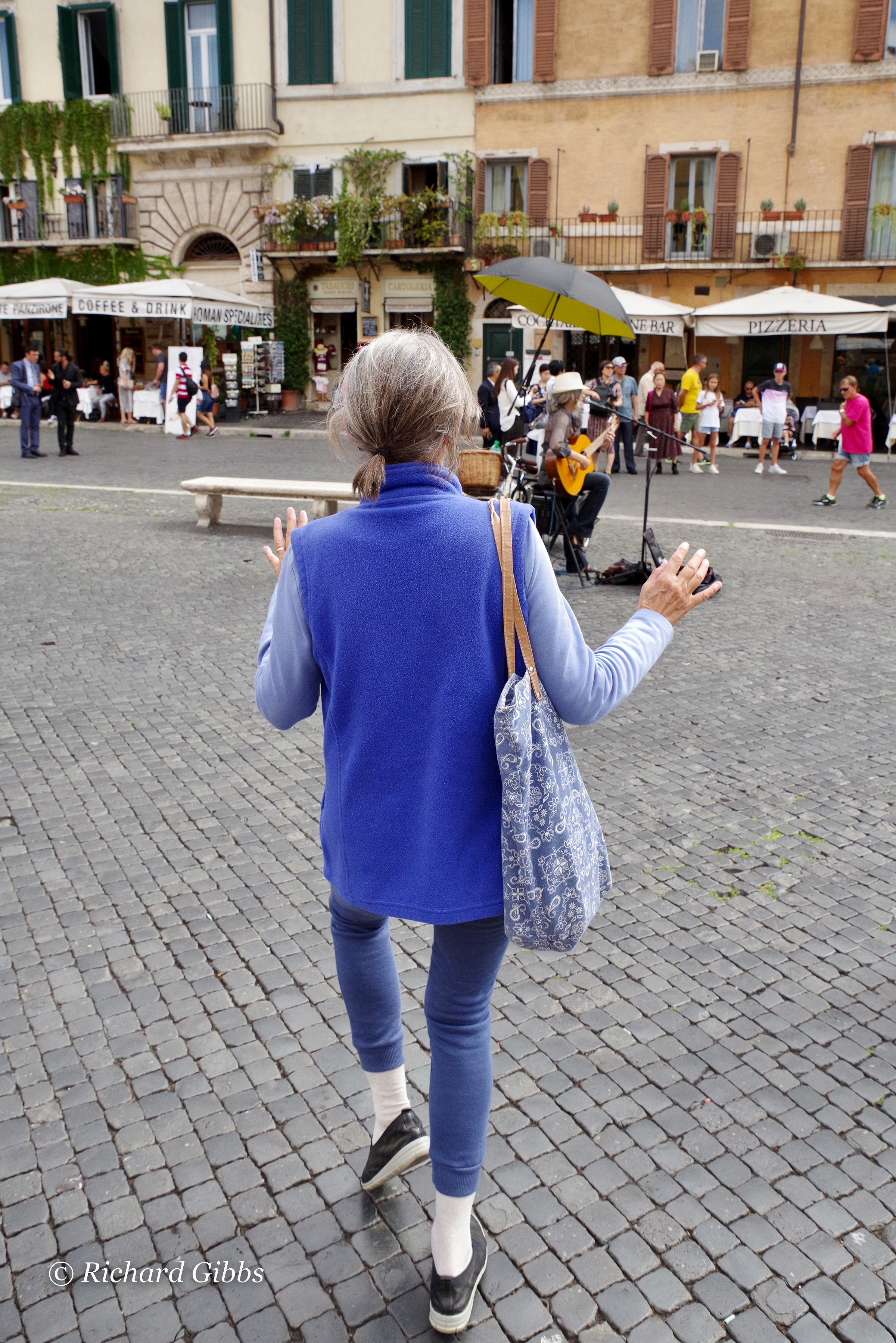
And here was Amanda just three years ago - dancing to the music in Piazza Navona - so full of life and happiness.


Piazza Navona, September 10th, 2019


Pale brows, still hand and dim hair,
I had a beautiful friend
And dreamed that the old despair
Would end in love in the end:
She looked in my heart one day
And saw your image was there;
She has gone weeping away.

The Lover Mourns for the Loss of Love

W B Yeats