Showing posts with label Bologna. Show all posts

10 December 2023

Something I wrote 35 years ago.....

NOVEMBER 1ST, 1988

Monte Amiata

Tuscany


Amanda and I have just stopped by for a night to light the fire.  It is decidedly autumnal here and yet we have been lucky with the weather. We were in the Dolomites briefly and the sky was stark blue, like a gothic vault, and the air as crisp as toast.  At 1000 metres the nights are now well below zero, and the car was a block of ice for a while in the mornings, but the inn was double-glazed and feather-duveted and we were good and snug.


On the way down we came via Garda, but couldn’t see the other side for mist.  We spent a night at Sirmione, a curiosity that Catullus would surely now avoid, but peaceful at this time of year:  the morning was sunny, the lake soft and transparent and the olives on the headland, with no one about, created one of those timeless Italian scenes – grey-green trees, pale blue water and sky, white and pink rock – but still the visibility was poor and the lake remained a mystery.


The Pianura Padana was worse, though not dangerous, as it had been on the way up, veiled in thick gauze, with the occasional disc of sun and the looming poplar trees.  In a way it is effective, and one can easily imagine the lumbering Gonzagas riding out from Mantova to hunt, but it’s a tiresome light, and it clings – it reminds me of Manchester, when I lived in Levenshulme.  I never saw my street in sunlight and whenever I went out, even for just a paper from the corner shop, I had to wash the grime off my face and hands when I got back.  There aren’t many similarities between Italy and Manchester, but that raw humidity that sticks to you and eats into your skin is something I am glad to have left behind.


We called briefly on Guido Reni in Bologna. The city teams with life, and prospers.  I know of no market area as appetising as that just off the Piazza Maggiore, the Via Pescherie Vecchie rivalling its Spanish and French counterparts. The civic and tourist information office, also on Piazza Maggiore, is also a marvel, and the comparison in efficiency, design and welcome with Rome and the South is startling.  Here you can consult computers or people, and reliable information about travel or accommodation is given, even with a smile!


Anyway, there’s a major exhibition of the work of Guido Reni in Bologna, at the Pinacoteca and the Archiginassio.  There has been much talk about this artist, who lived quite a bit of his life in Bologna and who died there in 1642; it’s as if he’s been rediscovered and ‘talk’ ranks him very highly.  Perhaps his effect, in his time and after, was very great?  This is where I wish I knew so much more.  I have learned to appreciate many things, about Italy and otherwise, by learning what was going on: the development of the portrait from the idealised, or stylised, picture, for example, the particularisation of light sources, the introduction of perspective and modelling, the idea that in the Mona Lisa Leonardo was trying to express, through her smile, ‘Her complex inner life.... caught and fixed in durable material,’ (Kenneth Clark).  But what is it that makes Guido Reni so important?


As Amanda and I wandered round these galleries, we quickly tired of Madonnas in puce silks gazing upwards with anguish and awe in their faces, and of painful deaths, and saintly poses.  One feature that struck us was that the babies were all chunky, rippling, blubbery infants as far removed from Roman-occupied Nazareth as if they had been Cantonese or Peruvian – not that that matters, though, as nobody seeks ethnic authenticity in Italian painting.


But what do we look for?  Guido was a ‘religious’ man, that seems obvious, even if a lot of his paintings were commissioned by the church and hence it was his job.  He communicates the pains of martyrdom and the glory of the Virgin in a way that would be effective and impressive on a gloomy church’s candle lit altar.  One has only to think of the acres of billowing dresses on Titian’s ‘Assumption’ in the Frari in Venice to understand the power of colour in a dark place; but Guido’s colours are more acidic; they are the colours of pale death, and his people suffer from anaemia, and they have cadaverous eyes.


The three paintings in the whole exhibition that did make an impact on us were: the corner of the ‘Slaughter of the Innocents’ (which they use as a poster); here the young mother twists to protect her child, is moving to evade the killers and is imploring God on High to be merciful.  In the context of the painting as a whole there is structure, geometry, power in the design, and in the face of the fleeing girl there is humanity.  


The second painting we liked was Guido’s portrait of an old woman, who might have been his mother.  If she wasn’t his mother, she was certainly someone’s and you can see the natural pride and preoccupation that makes her come alive.  She is thinking; she is worrying about whether her boy is getting enough to eat and about whether she looks ‘decent.’  She doesn’t like to bother the painter with all this fuss; she’s just an old woman, but she is proud that someone cares enough to think so well of her, though she’s still not convinced that she is really worth it.  And she is worried that if he takes much longer, she will miss the shops and she has nothing in the cupboard for supper.


The other picture we were impressed by is not by Guido:  it is of Guido.  Here we see the earnest, intelligent expression of the man who has striven all his life to express his fear of God and his adoration of Mary, using the utmost ounce of his skill from his God-given talent, and he is not sure that he has got it right; he still hasn’t cracked it.... perhaps he should have used a deeper red, or perhaps that Saint Jerome should have faced to the left and down?  You can imagine that he too would be impatient to have the portrait finished: ‘There’s work to be done; I’m not worth all this fuss and bother!’ (Like his mother.) It is the face of a man, too, who would have been much embarrassed by the streams of school children and professors, tourists and housewives, bank clerks and football players, all paying homage to him. That’s not what his art was for, most of it should be in churches, where the silent eyes of restless mortals can contemplate the stories, the mysteries and the glory of strong faith.


Of course, I am probably quite up the creek.  But there was one other thing that caught my eye, and that was the duplication of a large canvas on a classical subject.  On the left of the picture the naked Atalanta stops to pick up an apple, moving left; on the right, the little figure of Hippomenes stretches out of the frame to escape.  Who amongst hoi poloi would know what is going on here?  And why on earth are there two identical (?) versions of it?  And why the dickens don’t they tell us something in the exhibition?  I guess, and I shall look it up in a minute, but I will guess, that even the most devout artist must get sick of virgins and saints sometimes, and the development of any artist depends on at least two things: one is progress in technique and the other is people buying your work (even posthumously, à la van Gogh). Presumably this was an experimental work, for intellectual reasons (inspired by the popularity of Ovid’s ‘Hippomenes and Atalanta’ - a clever story of a suitor outwitting a girl in a race by dropping golden apples – as you probably well know?) And it proved popular.  So, if you can sell two of the same, why not?


Last night we stayed at Greve in Chianti.  It was dark, and it had rained, and we didn’t feel we could make it further.  Besides, neither of us knows the Chianti area very well, so it was a new experience.  The arcaded triangular piazza is very attractive and we found a warm and quiet room in the Albergo Giovanni da Verrazzano. This has been a locanda for about two hundred years and the beamed ceiling and private terrace gives the accommodation charm, although this is somewhat spoiled by cheap modern cupboards and an awkward juxtaposition of a photographic poster and an African batik.  We thought of having supper in the hotel, but it didn’t open ‘til eight and looked costly, so we went out to explore.


The keeper of the enoteca is a wary contadino on to a good business; his shop is very attractive, leading back into store rooms or stables where most of the different labels of the Gallo Nero (Chianti Classico) area are displayed, ordered in different years.  He wasn’t very forthcoming at first, but when we took his advice on different names to try, and started buying and talking, he became very friendly, giving us a wealth of information, including where he buys his loose wine, and finally the name of a trattoria to try nearby.


So, we drove up the hill in the damp dark night and found ourselves in the echoing alleys of Montefioralle, a medieval castle just above Greve.  Here we found the Guerino, a family trattoria with a painted ceiling and a beautiful terracotta stove, though this unfortunately was not lit.  We did soon warm up, however, with excellent village wine and a steaming bowl of ribollita.


It was one of those places that wouldn’t give you a menu (though one was posted at the door) but we trusted our advice and the son who served us was very gentle and helpful and, when we had finished washing home-made cakes down with Vin Santo, we were perfectly happy with a bill of forty-two thousand.


This morning was heavily frosty, but bright, and, when we had warmed up the car, we headed off for a tour of a slice of Chianti.  The autumn colours may be past their best, but the yellow and ochre tints of the spent vines and the turkey-oak woods had a muted beauty in the clean, low sun.  The shaded ground was frosted, white fringes on the blacks and browns of the undergrowth, the road and the sun-struck fields steaming gently, swathing our path in a rustic fragrance. How different from the close humidity of the Po Valley!  These defiles and gradual undulations exude well-being, and their produce is immediately recognisable as bottled health, combining Keats’s Nightingale with his Autumn. 


We by-passed Siena and raced down the Via Cassia and over by Castiglione d’Orcia to have lunch with Andrew and Yvonne Brown.  As we got nearer Monte Amiata, we became more and more blown about by gusty winds and up on the mountain we could see heavy storms coming down.  For us it remained dry, but yesterday Yvonne thought they had been struck by lightning and Andrew was only just in time resetting the chimney as it fairly chucked it down.


They are trying hard to sell.  The milk factory in Seggiano hasn’t paid Andrew since March, and is in liquidation at the moment because the region has not paid the compensation for all the milk and cheese destroyed during the Chernobyl panic.  They have had it hard in recent years: it is easy to say that as you make your bed you must lie, but the obstacles of Italian state bureaucracy are mountainous and if you don’t have aristocratic finances or the back-up of another job (as many small farmers, like Corrado, have) or the beneficial network of an extended family to help when times are hard, it is very difficult to survive.


Apart from the delayed subsidies for milk and olives (destroyed in the 85/86 winter) there’s also the natural world to deal with: to warm the house Andrew has to collect and saw up thirty quintals of wood, and only the other day one of his sheep was found headless in a ditch – tracks of some dog (or fox?) all around the barn.


After lunch we sat for a while in their sitting room by the fire; parts of the house they have finished restoring – this room, the dining room, the kitchen and the stairs – are beautiful.  Apart from the furniture that Yvonne has collected, the walls, ceilings and windows are nicely done, either leaving clean natural stone, or in white and black, and relaxing by a blazing stove with a bright Tuscan hillside shining through the glass is a fine experience.


We left them with a good bit of daylight to spare, as it is always difficult getting up here, and making beds and sweeping out when it’s dark.  As it is we stop to greet Corrado and Concetta, and Corrado ushers us in to the dim kitchen, ordering Concetta to fetch a bottle of wine.  We sit at the table, the children perched in the fireplace.  Concetta hovers about, producing some slabs of sponge cake – excellent for soaking up the wine, but heavy.... and we settle into our routine.  I ask about the season and the wine and so on, and Corrado gets on to some political subject, often with a British slant. It is actually very interesting to talk to him, though sometimes it is hard to follow.  His dialect is difficult and his habit of talking fast doesn’t help.  On occasions when I have brought Italian friends they have had difficulty too, so it’s not just me..... And then, if he goes into a monologue about his army service, or fire-fighting (on Elba, for example, where ‘the people must eat stones – there’s nothing else there!’) he can be hard to stop.  His children listen with rapture, though I suspect they also find it amusing, and Concetta butts in with a correction, or translation, at times, though she too appears to be having a whale of a time.


They do make a happy family.  Corrado’s imagination is working on being a funny old man at present, and he has no illusions about the future.  Giacomo is planning to become a Carabinieri, and so the farm will eventually cease to function, unless Maria marries someone who is prepared to work the land (a rarity these days).  When Corrado retires from the Corpo Forestale he is going to buy a few sheep and eke out his days on the hillside.


When we finally extricate ourselves, we have the hill to climb as dusk starts to fall.  Blackbirds crash away from us in alarm, and small rodents flurry in the fallen leaves attempting to gather some last energy before the sun goes.  As always, the last corner of the track nearly finishes us off, but then there’s the flat run, green with untrodden grass where a trickle overflows from the fontana.


In front of the house there are autumn crocuses, pale violet with saffron stamen; just a few, scattered wide, but enough to lend colour to the rather weary aspect the land has this year.  It has hardly rained for months and there are no fungi round here. It has been good for the grapes, but bad for most other things.


Although it is only a month since we last opened up the house, it is amazing how cold and desolate it has become.  I hurry to make up our bed and to lay and light the fire, as even with light outside the sun is not strong enough to penetrate the interior gloom for long now.  I throw open shutters and windows to get the air circulating, for, no matter how dry it is outside, the living foundations always make the air inside cool and damp.  When three families lived here in the old days, three fires would have smouldered permanently and animal warmth from the stable would have contributed, but even then, the back rooms, with their earth floors and lack of windows would have been good stores for hams, and cheese, and wine.


Even in August, as the crossed shadow of the sala window creeps across the blackened red of the chimney breast, the fire is often lit here.  It’s not just the beginning of the chill but we are at 600 metres above sea level, and there’s a need for houses like this to be brightened by the jewel gleam of burning wood, and the smokiness is a natural part of the tang of mountain air.


When we have settled ourselves, and night falls, there are only the sounds of the mountain: the stirrings of the wind, the clatter of a dry leaf on the tiles, the scrabbling of a mouse that needs catching, the distant bark of a dog.....  It is wonderful to sit in the shelter of the red-beamed roof, with a glass of dark wine and a hunk of salty cheese, or a handful of chestnuts.  It seems lifetimes since I panted up the track for the first time, in hot summer sun, and since I first sat at the window in autumn, after sunset, trying to identify the lights I saw, the villages dotted on the maps of the night.


Now when I look out, I know the clusters of fireflies and diamonds: Monticello on the horizon, Montenero in the shadows, Poggio Ferro behind nearby Seggiano, and so on, though nearly every time I look now there’s a new flicker somewhere.  Looking down will soon be almost as starry as looking up; and I think that when this house was built there would just have been the stars, and the night-scape would otherwise have been lit only by the occasional gleam of light from a momentarily opened door.


This afternoon it snowed up the mountain. When we left the Browns’ the clouds had lifted a little and we could see the beeches all white above Pescina.  It won’t be long now before the steely claws of winter clasp this place, but for now Amanda and I are snug, curled up like cats in front of the fire.  Happy days!


2 October 2022

The Milky Way (2)

 Memories' Lanes


Think not that I am come to send peace on earth: I came not to send peace, but a sword.... (Matthew 10:34)


From Innsbruck it is all downhill.  I have Lucio Dalla on my headphones and Anna Karenina to read.  We pass Brennero at midday, bidding farewell to the Tyrol with its steep gorges, cantilevered autoroutes, rocky peaks and high pastures.  Hello (again) Italia.  Around half one we cruise past fruit farms, and vineyards, some olives and the occasional palm.  Bolzano still in the mountains, with pinnacle castles, then down to the flat and into Verona.  From here to Bologna we cross the vast plains of the Po Valley, with rice and maize and vegetable fields all flat under an azure sky.


Bologna reminds me, as I referred to in Part 1, of Easter 2015, and Amanda.  I find it hard to grasp that it was so long ago, but the memories are still sharp.  But I also have memories of visiting the city with my brother and parents the day that Elvis died, August 16th 1977, when the heavens wept.  Are memories good to hold on to?  If Amanda was with me, would she recognise the place?  Would she have feelings, stirred in any way by familiarity?  Would she remember climbing the 498 steps of the Asinelli tower?  As I retrace paths we walked in the past, I begin to wonder whether it is healthy to hold on to all these recollections?  Just as I have begun to question the value of looking at works of art, I now question whether memories are worth the pain they may contain.


Non-stop train to Rome.  The first half hour or so tunnelling through the Apennines, then out into the freshness of Tuscany and then spearing through Lazio, glimpsing the green waters of the Tiber, and rolling to a halt amidst the graffiti and the crowds of eternal Rome.  I am almost overwhelmed by the crowds, a teeming mass of people from all across the world, hurrying there, hustling here.


It is hot.  I wander lanes of memories: there I used to eat: here was my (ill-fated) pub, now a Pizzeria whose sign claims existence since 1984 (i.e. the year we were closed down by police....).  The narrow path above Trajan’s Forum, from which Antonio and I played Hoopla with bicycle tyres over the stumps of antique columns by moonlight.  


I have a snack lunch at the Tre Scalini in Via Panisperna, where once we shoved the tables aside after dinner and danced to the tunes of a harmonica....


From the rooftop I gaze across the emotionless façade of Santa Maria Maggiore, raising a martini to the stone folds of the Madonna’s cloak, then I descend to dine with friends.


Over the next few days I encounter many old friends – ageing now, like me.  Illness almost goes without saying, from burst gall bladders to cystic fibrosis, depression to breast cancer (male and female).  Things fall into perspective – everyone is somehow worse off than everyone else – or are we all better off than somebody else?  It’s life – get over it!


In the morning I take another wander down my memory’s lanes.  Via Gregoriana, the Spanish Steps, an espresso in the Antico Caffè Greco (not that I was a frequent customer) in Via Condotti, 


a glass of Greco di Tufo in l’Antica Enoteca in Via Della Croce (once a simple Vini e Oli where you could fill your bottles with wine from the Colli Albani).  I pay my respects to the hooded statue of Giordano Bruno where he was burnt in the Campo de’ Fiori; I cross the Ponte Sisto where I passed twice a day for the bus to and from work in the 70s.  In Trastevere I chance upon an open door to the back of the old Cinema Pasquino, where we watched English language films under the stars when they slid the roof open.  


It looks like a bomb site now, but I am informed that it is to reopen this Autumn – which is glad news!  I have a drink in the Caffè di Marzio, on Piazza S. Maria in Trastevere, where my flatmate was knifed one night.  


I peer into the closed interior of the Pizzeria Ai Marmi (which for some reason I knew as Moroni’s) and lick my lips at the thought of their Supplì al Telefono (so called because the strands of mozzarella in the rice croquettes stretch like old fashioned telephone wires).  


I stroll to the river, enjoying a Grattachecca (hand shaved ice, flavoured with fruit syrup) from an old kiosk on the Lungotevere, then cross the Isola Tiberina and wind through the Ghetto and back up to my hotel.


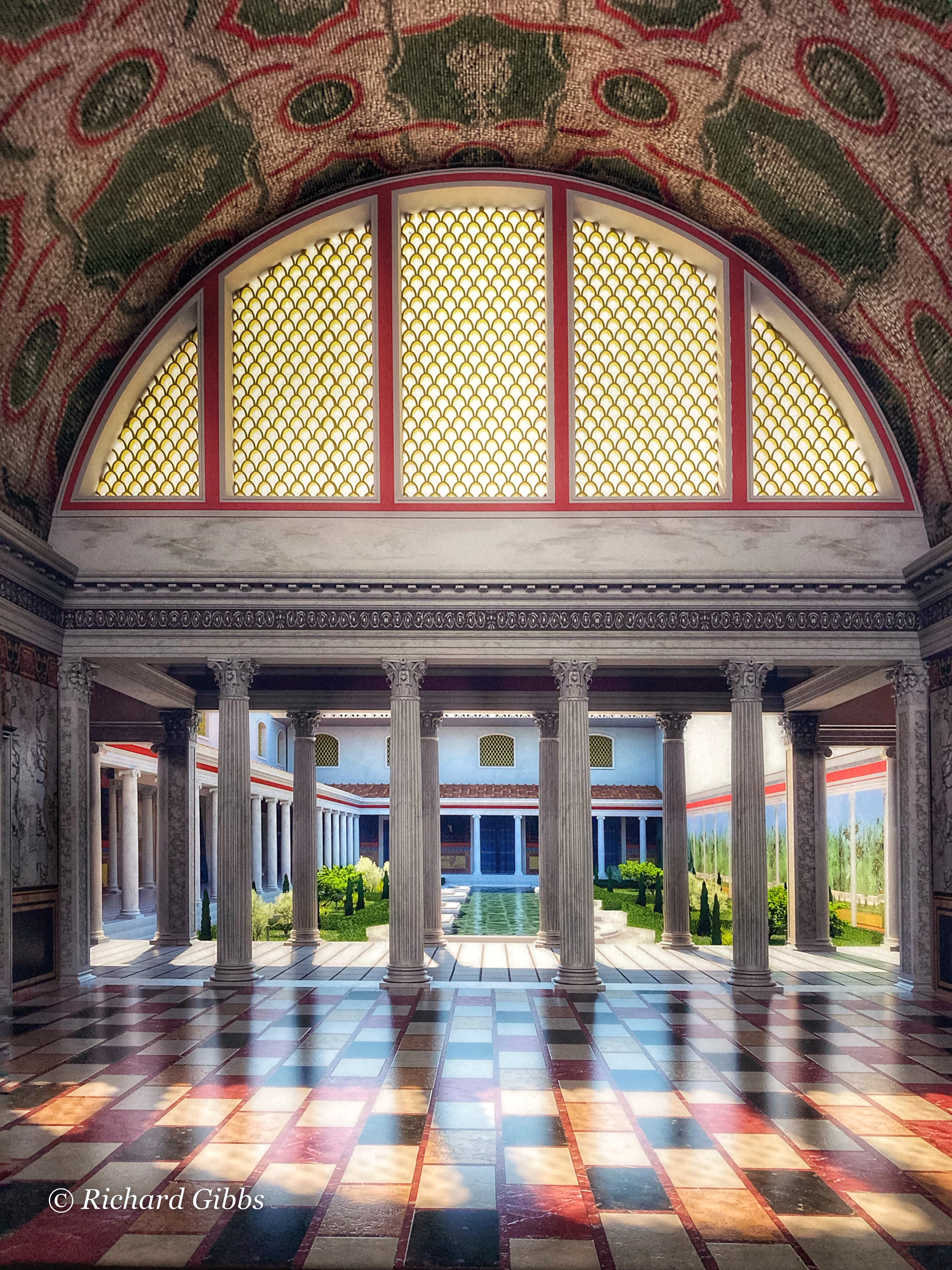
Before leaving Rome, I visit Nero’s Domus Aurea.  Some forty years ago I managed to get into part of this dingy ruin, but at the time there was little to see and nothing to explain.  It is now visitable in guided groups and various panels and pictures bring it to life, around 2,000 years since it was obliterated by Trajan when he bulldozed the foundations of his baths over the tyrant’s palace.  The centrepiece of the modern visit is a Virtual Reality display which takes my breath away.  


This show strips away the grime and infill of the millennia and eventually brings you out into the flowering gardens where grasses shimmer and trees rustle in the breeze as you look out across the valley to the Palatine Hill.  Nothing I have ever seen, nor read, has made the ancient city come alive quite like this. 


I meet my daughter, Hannah, at the airport and we stay for a short while in Trevignano Romano, on the shore of Lake Bracciano, where she began her life.  


It is breezily pleasant here and we catch up with several more old friends, though sadly there are gaps in the line-up these days.


Then it is time to move on again and we motor up to Tuscany, stopping for a fishy lunch on stilts over Lake Bolsena.  On Monte Amiata we enjoy the quiet and rustic isolation of our friends’ old house, and have a wonderful feast under the fig tree as the sun sets.  Fegatelli and wine from Col d’Orcia; a glass of grappa by the fire.  Wonderful.


I have coffee in the morning with 94-year-old Corrado, when we manage to find the off/on switch to his coffee machine!  His days are lonely since Concetta passed, but he maintains an interest in the ways of the world, and asks kindly about Amanda. 


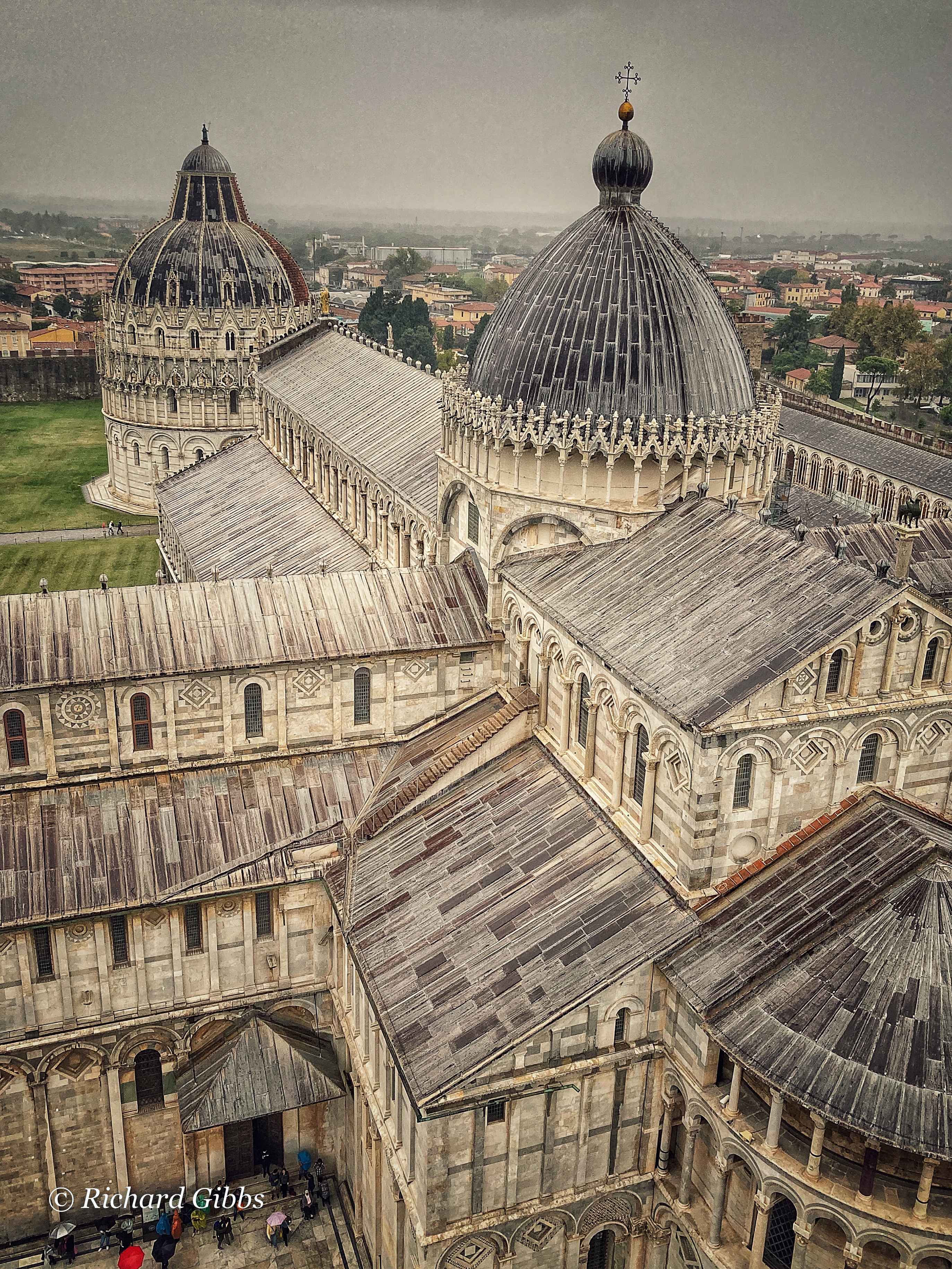
Time passes all too quickly here, and Hannah and I have to return the car to Pisa, where we meet up with my cousin Sarah for supper, then, subsequently, in the rain, we climb the slippery steps of the Leaning Tower – a strange first; strange as I am beginning to wonder if I will pass this way again. 


And then, wistfully parting from Hannah who will fly home, I take the train to Nice, where, again in the rain, I treat myself to a platter of seafood at Le Café de Turin in Place Garibaldi.  Memories here are from years ago.  I used to meet my parents at a campsite in Vence, and we traced Matisse and D H Lawrence together.  Then, later, friends lived in the old town and Amanda and I helped carry bottles and bottles of Vin Rosé to their fourth floor flat.  But now – all is changed.  The Flower Market teems with tourists (again, I know I am one too!) who seem to be happy with Irish Pubs, chain restaurants, smoking shops, trinket sellers.  Gone are the oyster shuckers and chilled wines of yesteryear!  Perhaps it is time to ditch my memories! 


It is a coincidence that while I write these words, I am listening to Radio 3 on Sunday, and Michael Berkeley’s guest on Private Passions is Dr Jules Montague, whose book, Lost and Found: Why Losing Our Memories Doesn’t Mean Losing Ourselves, could hardly be more appropriate.


Another coincidence, perhaps, is that in yesterday’s Guardian there was a long piece by Ian Black, and his wife, Helen Harris.  The article was entitled, As my brain is shrinking, so is my world, which might appear to contradict Dr Montague’s thesis.  As someone from the Alzheimer’s Society told me, some years ago, however: When you have met one person with dementia – you have met one person with dementia.....  There is, at least as far as we can tell, no absolute certainty about the way a person will behave or feel or live once the brain begins to deteriorate.


In fact, one of the things I learned from Ian Black is that a side issue he may be suffering from is Corticobasal syndrome (CBS), a type of frontotemporal dementia that is characterised by damage to the cortical and basal areas of the brain, which control movement, thinking, language and behaviour. It is sometimes known as atypical Parkinsonism.  While [this] shares symptoms with Parkinson’s disease, including slow, stiff movements and tremors, it also causes problems with movement, memory, problem solving and speech. There may be changes to personality and loss of inhibitions. One of the most common symptoms is gradually losing the use of one limb, known as limb apraxia.


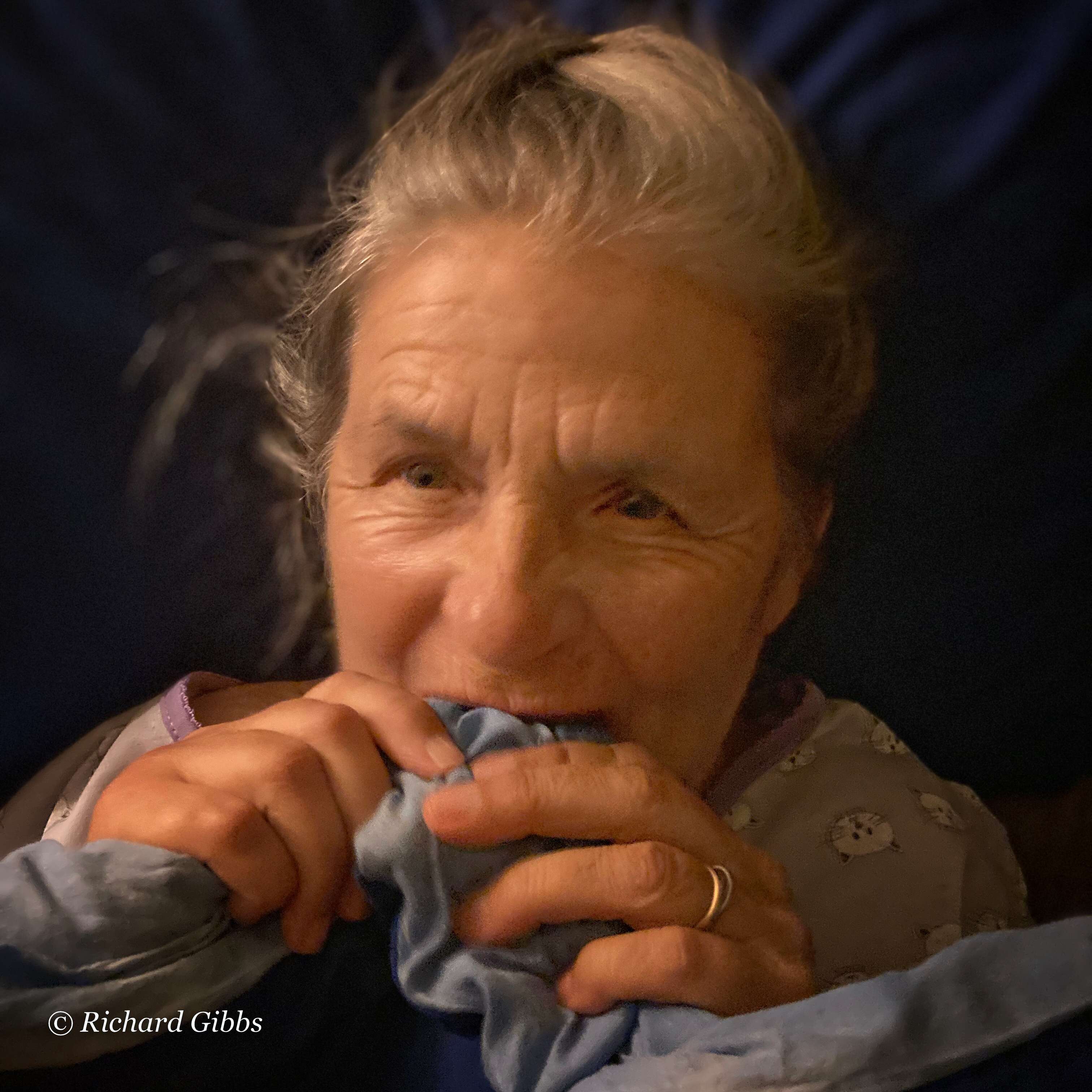
I find this most interesting, as Amanda has at times shown signs of tremors, and has progressively become slower on her right side, her right leg being less responsive than her left, her right arm weaker than the left.  As Ian Black writes, A key element is a growing inability to use one side of the body.  The underlying diagnosis can only be confirmed, however, in a post-mortem examination of the brain....


It is the end of the season. I turn my back on the south, on the sparkling Mediterranean which I have enjoyed so much in my life, and am borne at speeds of up to 300 kph, non-stop from Marseilles to Paris.  Here I make my way to 7, Rue de Faubourg Montmartre, where I have supper chez Bouillon Chartier, where I have lunched and dined almost every time I have been to Paris for fifty years now.  


I love the place, and I guess I would not love it if I had no memories of the meals I have had there.  Meals with friends, such as the late Lindsay; with family such as brothers and parents; and with Amanda.  Notably we went there for lunch on a Eurostar day trip from Harpenden on our wedding anniversary some years ago....  I don’t want to lose that memory.


So now, again, I am home, recovering, and preparing for the next phase of our lives.  I have had enough of travel, for now, and am glad to be home.  As the future slips into the past, I will continue to treasure memories, holding them for Amanda if for nothing else.  She may have lost her memories, but she is still herself.  


On my travels I have been reading Anna Karenina.  I crawl to bed at home and read the last chapters.  On page 809, Levin (the character closest to Tolstoy’s own ideas) mentions the soul, inadvertently connecting the conversation with the thoughts that occupied him so much.  This prompts Levin’s half-brother Sergei Ivanovich to quote: ‘I have brought not peace but a sword,’ which is the very passage of the Gospel that had always disturbed Levin most of all.


I am startled, as these are almost the very last words (spoken by Christ) in Luis Buñuel’s film La Voie Lactée (The Milky Way), his surrealist film about two pilgrims on their way from Paris to Santiago de Compostela.  The exact words in the St James Bible are: Think not that I am come to send peace on earth: I came not to send peace, but a sword.... (Matthew 10:34). And as I drift to sleep, I wonder if the coincidence of this passage appearing in two works of art currently on my mind has a particular significance.  [No, it isn’t an excuse for Trussonomics.]  An orthodox interpretation is that Christ is telling his disciples that there needs to be change and that change will not necessarily be entirely peaceful (it is not new to proclaim Christ a Revolutionary). 


But perhaps there is a more homely interpretation, for me at least.  


I need to be cruel, to be kind.....


17 June 2017

Italy through the eyes of a foreigner....

L'Italia attraverso gli occhi di uno straniero

[Italy through the eyes of a foreigner]

An exhibition of twelve photographs


*     *     *

1 Campo dell’Angelo Raffaele, Venezia


This quiet piazza on the Dorsoduro, with a 14th century stone well head, and a pleasant restaurant (Pane, Vino e San Daniele, which, once a traditional trattoria favoured by local artists, reopened in 2004 as a fashionable outlet for San Daniele ham) can be overshadowed by vast cruise ships, but is sufficiently away from the tourist routes and near to the university to maintain the air of an inhabited community, rather than the false make-up of a prostituted city.  The light here on the masonry and the washing reflects the warmth of Italy at its best.


Campo dell’Angelo Raffaele, Venezia

Questa piazza tranquilla del sestiere di Dorsoduro, con una cisterna del trecento ed un bel ristorante (Pane, Vino e San Daniele, una vecchia trattoria un tempo frequentata dai pittori residenti nella zona, che è stata riaperta nel 2004 come punto di vendita chic del prosciutto San Daniele), sebbene venga di tanto in tanto sovrastata dalle moli giganti delle navi da crociera di passaggio, rimane abbastanza lontana dai percorsi turistici e abbastanza vicina all'università per mantenere la sua caratteristica di autentico spazio vissuto piuttosto che di quartiere "contraffatto", truccato e tirato a lucido per piacere ai forestieri. Qui le facciate illuminate e i panni stesi emanano quel tipico calore del Bel Paese.


*     *     *


2 Beppe Maniglia, Bologna


Beppe Maniglia, who was born Giuseppe Fuggi in Kolosvar on April 19th 1943, is as much a feature of the Piazza Maggiore, Bologna as the statue of Neptune just nearby.  Despite efforts by the local authorities to limit his volume, he performs regularly with his guitar amplified by colossal speakers mounted on his Harley Davison.  As an artist of the eccentric school, Beppe is a street entertainer of the highest quality.


Beppe Maniglia, nato Giuseppe Fuggi a Kolosvar il 19 aprile 1943, caratterizza la Piazza Maggiore a Bologna a pari titolo della vicina statua di Nettuno. Nonostante i tentativi da parte del comune di fargli abbassare il volume, Beppe vi suona spesso con la sua chitarra amplificata da enormi altoparlanti montati sulla sua Harley Davison. Come artista "di stampo eccentrico", Beppe è un musicista di strada di primissimo ordine.


*     *     *


3 Antica Monterano


The reflection of the Monastery church of San Bonaventura in the octagonal fountain at Monterano (once Manturianum, which originated in the bronze age and was enlarged by the Etruscans) is an image of this ghost town not far from Manziana in Lazio. Once the seat of Bishops, and later a palace of the Orsini family, ornamented by lions by Bernini, the town was sacked by the French at the end of the 18th century and then finished off by malaria.  In recent times it has been used as a film set, notably Il Marchese del Grillo with Alberto Sordi in 1981, and Ladyhawke with Michelle Pfeiffer in 1985, which was when I first visited, picking my way through plastic flowers and discarded hay bales.  Now, preserved in the Riserva naturale regionale Monterano, it is one of many treasures hidden in the hills north of Rome.


Antica Monterano

Il riflesso della chiesa abbaziale di San Bonaventura nella fontana ottagonale di Monterano (l'antico Manturianum, insediamento risalente all'Età del Bronzo, successivamente ingrandito e sviluppato dagli Etruschi) è una suggestiva immagine di questa città fantasma situata non lontano da Manziana. Un tempo sede vescovile,  poi della famiglia Orsini, la cui dimora era fregiata di leoni scolpiti dal Bernini, la cittadina venne saccheggiata dai francesi alla fine del settecento e stroncata poi definitivamente dalla malaria. In tempi più recenti, il sito è stato scelto varie volte come set cinematografico. Qui sono state girate alcune scene de Il Marchese del Grillo (1981) con Alberto Sordi, e di Ladyhawke, con Michelle Pfeiffer, nel 1985, l'anno in cui mi trovai qui per la prima volta, in mezzo a mucchi di fiori di plastica e di balle di fieno abbandonate! Ora, per fortuna, è un'area protetta compresa nella Riserva Naturale Regionale Monterano, ed è uno dei tesori nascosti delle colline a nord di Roma.


*     *     *


4 The Mandolin Player


The mandolin is a smaller version of the mandola, an ancient instrument of the lute family. The mandolin originated in Italy in the Sixteenth Century. It became popular chiefly in the South, where the instrument as we know it today, with its familiar shape and the GDAE (violin) tuning, was first produced in Naples in the Eighteenth Century, its first renowned makers being the Vinaccia family. It was a fixture in many orchestras of this period, and features as solo instrument in concertos by composers of the stature of Antonio Vivaldi. More modern variants, such as the Gibson “F” flatback, have contributed to its popularity in other genres. The one in the photo in the player’s hands is Korean and resembles a small guitar, whereas the one on the wall is the traditional Neapolitan model…. but made in France. The gentleman playing the mandolin here has a liking for the music of the blind Irish composer Turlough O’Carolan and was a founder member of the seminal Rome-based Irish folk group Róisín Dubh in the 1970s…. He is a dear friend of mine, who for many years was a guardian of the British Embassy in Rome.  His father, like mine, came through Italy from Africa with British Forces in the second world war.  On the way he encountered a charming Sicilian girl who he later married.  Antonio now lives in a gothic building in Genazzano.


Il Mandolinista

Il mandolino può dirsi una versione più piccola della mandola, un antico strumento della famiglia dei liuti. Le sue origini sono italiane e risalgono al cinquecento. Divenne popolare più che altro al sud, dove assunse la sua forma tipica nonché l'accordatura sol-re-la-mi (dal basso all'alto) come nel violino. Questo modello detto "napoletano" nacque, appunto, a Napoli nel settecento, per mano di abili liutai come i Vinaccia. Veniva impiegato nelle orchestre dell'epoca, godendo di una "rispettabilità" pari a quella degli altri strumenti. Compositori come Vivaldi ci hanno lasciato concerti dove il mandolino figura come strumento solista. Varianti moderne come il Gibson "flatback" hanno contribuito alla sua popolarità proponendolo per altri generi musicali. Quello in primo piano nella foto è coreano e assomiglia ad una piccola chitarra, mentre lo strumento appeso al muro è il tipico mandolino napoletano. Il personaggio ritratto nella foto ha una particolare predilezione per la musica del compositore e arpista cieco irlandese Turlough O'Carolan (1670-1738), e negli anni settanta fece parte del gruppo romano dei Róisín Dubh. Antonio è un mio grande amico. Per molti anni ha lavorato come guardia presso l'Ambasciata Britannica a Roma. Suo padre, come il mio, arrivò in Italia dall'Africa con le forze armate britanniche durante la Seconda Guerra Mondiale. A Roma conobbe una ragazza siciliana: si innamorarono e si sposarono. Adesso Antonio abita a Genazzano in un palazzo con fregi gotico-aragonesi tipici del luogo.


*     *     *


5 The Colosseum


As the autumn sun sets behind the Roman Forum, the walls of the Flavian Amphitheatre seem almost benign, but its mass is evident from the stream of tourists who crowd past its arcades.  As a symbol of the power of the Roman Empire it is unrivalled, though ironically it was in fact designed to exert control over the people (through bread and circuses) rather than to celebrate greatness.  It was completed in AD 80 and could accommodate up to 80,000 spectators.  Despite the decline of the Roman Empire it was used for cruel sport and spectacle until the sixth century, after which despoliation for building materials, earthquakes and neglect led to its becoming the ghostly ruin so much admired by romantic visitors on the Grand Tour.

While the outside of the Colosseum shines with travertine, inside is all brick and concrete, and intricate channels and passageways.  It is a remarkable construction, not just because of its size.  It took less than ten years to construct in the first century AD, following the great fire of Rome and the death of Nero.  In the inaugural games some 9,000 wild animals were killed, and sea battles were staged within the flooded arena.  The intricate subterranean layout now exposed involved trapdoors and cages from which beasts were released to surprise unfortunate Christians condemned to public death, and to meet their own ends by the arms of gladiators.


Il Colosseo

Mentre un sole autunnale tramonta dietro il Foro Romano, le mura dell'Anfiteatro Flavio assumono un aspetto quasi benevolo; ma la sua imponente mole è messa in risalto dalla massiccia presenza di turisti che sfilano davanti alle sue arcate. Come simbolo del potere dell'Impero Romano non ha rivali, sebbene, paradossalmente, fosse progettato come strumento di controllo del popolo (la strategia politica del panem et circenses) piuttosto che per celebrare la grandezza dell'Impero. Fu ultimato nel 80 d.C., e poteva contenere fino a 80.000 spettatori. Nonostante il declino dell'Impero, continuò ad essere utilizzato per sport e spettacoli cruenti fino al sesto secolo; dopodiché iniziò un periodo di saccheggi (per ricavare materiali per l'edilizia), di terremoti e di abbandono, conferendogli col tempo quell'aspetto di immenso rudere spettrale tanto ammirato dai visitatori romantici del Grand Tour.

Mentre sulla facciata esterna del Colosseo splende il travertino, al suo interno troviamo mattoni e calcestruzzo, e l'intrico di corridoi e viottoli dei sotterranei. E' una costruzione davvero straordinaria, e non solo per la sua mole. Fu terminato in meno di dieci anni nel primo secolo a.C., dopo il grande Incendio e dopo la morte di Nerone. Alla sua inaugurazione furono uccisi 9.000 animali selvatici, e l'arena fu inondata per la messa in scena di spettacolari battaglie navali. I sotterranei, ora visibili dall'alto, contenevano botole e gabbie dalle quali le bestie venivano liberate per cogliere di sorpresa i poveri cristiani condannati a morire davanti a un pubblico, e per poi morire essi stessi per mano dei gladiatori.


*     *     *


6 Santa Severa


The beach at Santa Severa was for years where we took our children for sun, sea and sand, even in winter, where we sometimes shared it with then Presidente Oscar Luigi Scalfaro, his daughter and his enormous bodyguards.  The Etruscan port of Pyrgi was here, and an 11th century castle rises impressively from the beach, casually sheltering the itinerant sellers of beach wear and swimming aids as well.


Santa Severa

La spiaggia di Santa Severa è stata per anni una meta preferita per le nostre escursioni famigliari, e anche d'inverno le nostre bambine hanno potuto godersi sole e mare e giocare nella sabbia. Qualche volta ci è capitato di condividerla con l'allora Presidente della Repubblica Oscar Luigi Scalfaro, con sua figlia e con le loro enormi guardie del corpo. Qui un tempo sorgeva la città portuale etrusca di Pyrgi. E il castello dell'undicesimo secolo svetta imponente a ridosso della spiaggia, dando ombra ai venditori ambulanti di costumi da bagno e occhiali da sole.


*     *     *


7 Siracusa


Siracusa is the jewel in Sicily’s crown, and, thanks to strict controls, only really special cars are allowed on the island of Ortygia.  Here a bride is delivered to the cathedral, which was originally constructed in the seventh century AD on the site of the fifth century BC Temple of Athena. It is chastening to think for a moment about the two and a half millennia of rituals that have been performed on this site.


Siracusa

Siracusa è il gioiello incastonato nella corona della Sicilia, e, grazie a rigorosi controlli, solo alcuni veicoli molto speciali possono accedere all'Isola di Ortigia. Ecco una sposa che viene accompagnata alla Cattedrale, la quale fu costruita nel sesto secolo d.C. sul sito di un tempio dedicato ad Atena, risalente al quinto secolo a.C. C'è da riflettere sul fatto che da due millenni e mezzo questo è un luogo di sacrifici rituali...


*     *     *


8 Trevignano Romano


What is there to say?  If ever there was a crock of gold at the foot of a rainbow, it must be in Trevignano. [This village, by the way, is where we lived fro 1983 to 1995, though we still had a house there until some years later. It is also the village where these photos have been on show in the Bar La Vela.]


Trevignano Romano

Semmai esistesse un tesoro ai piedi di un arcobaleno, di sicuro si tratterebbe di Trevignano.


*     *     *


9 La vecchia tonnara di San Pietro


The island of S Pietro, which lies off the extreme south west of Sardinia, is, at least superficially, a paradise, with clear waters, a wealth of bird and sea life, and the lively port of Carloforte.  Evidence of a busy past, however, lies in this disused tonnara, or tuna processing plant, where ruined boats and rusting anchors lie jumbled in the sun.


La vecchia tonnara di San Pietro

L'isola di S. Pietro, che si trova all'estremo sud-ovest della Sardegna, è, almeno in apparenza, un paradiso, con acque limpide, un gran numero di uccelli, una ricca e variopinta vita marina, e il porto di Carloforte che pullula di vita. Testimonianza di un passato assai più movimentato è questa tonnara abbandonata, dove un groviglio di barche in rovina e ancore arrugginite giace alla luce e al tepore del sole.


*     *     *


10 The Costa Concordia, Giglio


The Tuscan island of Giglio has long been one of my favourite places in Italy, and so it was with particular shock that I woke to the news of the wreck of the Costa Concordia on January 14th, 2012.  This was a terrible day for Italy; the needless loss of life and the distress caused to victims and families make it one of the worst of peace-time disasters.  The only positive things to say about it all, however, are that it could have been much worse, and the salvage operation was handled brilliantly.


L'Isola del Giglio, nell'Arcipelago toscano, è da tempo tra i miei luoghi preferiti in Italia; è anche per questo che la notizia del naufragio della Costa Concordia, il 14 gennaio 2012, mi ha colpito in modo particolare. E' stato un giorno terribile per l'Italia. Un disastro tra i più gravi in tempo di pace se si considera il numero delle vittime e il dolore dei loro famigliari. Di positivo, comunque, si può soltanto dire che poteva andare molto peggio e che le operazioni di salvataggio sono state condotte in maniera ineccepibile.


*     *     *


11 Corrado and Concetta Pieraccini


When I arrived in Italy, in 1976, Corrado and Concetta were among my first Italian friends.  Corrado was born in a remote hill farm at about six hundred metres up Monte Amiata, near Seggiano in Tuscany.  He built himself a new home by the road, married Concetta from Calabria, started a family, and sold the farmhouse to English friends of mine.  I have been lucky enough to have been able to visit ever since, and many’s the hour I have sat in their kitchen, sipping his very particular wine, and discoursing, in our very individual dialects, on the state of the world.


Corrado e Concetta Pieraccini

Quando arrivai in Italia nel 1976, Corrado e Concetta furono tra i miei primi amici italiani. Corrado è nato in un casale isolato, a seicento metri sulle pendici del Monte Amiata in Toscana, nei pressi di Seggiano. Si era costruito una nuova casa vicino alla strada provinciale, aveva sposato Concetta, una ragazza calabrese, e avevano avuto dei figli; poi ha venduto il casale a certi miei amici inglesi. Ho avuto la fortuna di potermi recare spesso a trovare i coniugi Pieraccini, ad assaporare la loro calorosa ospitalità ed il loro buon vino, una vera specialità(!), e a passare delle ore seduto in cucina discorrendo con loro delle cose del mondo, ognuno esprimendosi nel suo particolare idioma.


*     *     *


12 Ponte degli Alpini


The Ponte Vecchio over the river Brenta at Bassano del Grappa in the Province of Vicenza, is constructed completely of wood, and is based on a 1569 design by Andrea Palladio, though there was a bridge here before, and the current one has been rebuilt a number of times, having been damaged or destroyed by wars and floods.  My travels through Italy, via cities and countryside, through the islands, and across mountains, have shown me an extraordinary variety of wonderful sights.  Although this, with its magnificent setting, is just one of many, its history, and the adjacent museum of the Alpini regiment, make it rather special.  And, almost as an aside, the history of Italy is closely connected with bridge building – the title Pontifex Maximus is an honourable one!  [And would that there were more bridge-builders today!]


Ponte degli Alpini

Il Ponte Vecchio sul fiume Brenta a Bassano del Grappa in Provincia di Vicenza è costruito interamente in legno. Un ponte esiste in questo luogo da tempo immemorabile, ma quello attuale, che è stato ricostruito varie volte a causa di guerre o di alluvioni, è basato su un progetto di Andrea Palladio risalente al 1569. I miei viaggi in Italia, che mi hanno condotto attraverso montagne, per città, per campagne e sulle isole, mi hanno fatto conoscere una gran varietà di cose meravigliose. Benché questo ponte non sia che una delle tante meraviglie, la sua storia particolare e l'attiguo Museo degli Alpini lo rendono oltremodo affascinante. Vogliamo aggiungere che la storia d'Italia è strettamente legata alla costruzione di ponti: e che quella di Pontifex Maximus era ed è a tutt'oggi una carica onoratissima! [ci fossero oggi più costruttori di ponti!]


Richard Gibbs


Translations by Antonio Shorthose (Il Mandolinista)


*     *     *


L’Italia attraverso gli occhi di uno straniero

Bar La Vela,
Via della Rena, 23 - Lungolago, Trevignano Romano

(Please note that the bar is closed on Tuesdays)

From 01/06/2017


Richard Gibbs is a photographer and writer now based in Hertfordshire in England.  From 1976 to 1983 he lived and taught in Rome and then he moved to Trevignano.  Since returning to live in the UK with his family, in 1995, he has returned frequently to Italy, especially to Rome and Trevignano.

Richard acquired his first camera when he was 12.  His main interest as a photographer is in capturing the essence of place.  The set of pictures in the current exhibition is part of a series taken in the last few years in Italy on various trips.  The challenge with Italy is that while it is often very beautiful, and the light is wonderful, there are, inevitably, shadows as well.  It is easy to take beautiful pictures and to pretend that that is the whole story.  It is not so easy to see beyond the two dimensions…..

For many reasons, Richard is actively involved in supporting Alzheimer’s Society and if you have appreciated this exhibition please see https://www.justgiving.com/fundraising/Richard-GIBBS5 to make a donation


Or for more of Richard’s work please visit his website at www.richardpgibbs.org


Richard Gibbs, fotografo e scrittore, risiede in Inghilterra non lontano da Londra. Ha vissuto in Italia dal 1976 al 1995, prima a Roma, a Trastevere, poi a Trevignano, insegnando lingua e letteratura inglese alla prestigiosa St George's School. Torna spesso e volentieri in Italia, soggiornando perlopiù a Roma e a Trevignano.

Richard ebbe la sua prima macchina fotografica all'età di dodici anni. Come fotografo, è alla ricerca dell'essenza o dell'"anima" dei luoghi che riprende. Le fotografie selezionate per questa mostra fanno parte di una serie realizzata negli ultimi anni durante vari viaggi in Italia. La "sfida" rappresentata dall'Italia sta nel fatto che, mentre il soggetto è quasi sempre indiscutibilmente bello e la luce perfetta, ci siano, inevitabilmente, le ombre. E' facile fare delle "belle foto" senza pensarci troppo sopra; ma non è così semplice come sembra guardare oltre la superficie delle cose, per poi poter conciliare questi due aspetti.


Per motive personali, Richard contribuí al’Alzheimer’s Society e se potete, visitate  https://www.justgiving.com/fundraising/Richard-GIBBS5 per donare qualcosa....


Si puó trovare molto di piú a www.richardpgibbs.org


[The exhibition will be still be on show for at least some of the summer. 

The photos are also for sale.]